
Xin Yi Yu (University of Melbourne)
We’ve all heard the saying, ‘There’s no such thing as a free lunch.’
Of course, this does not mean we must pay for free goods and services; rather, there are hidden costs and trade-offs to every decision. Looking at the recent Allan Labour government policy granting free public transport until the end of May, there are several trade-offs to be unpacked.
Iran’s closure of the strait of Hormuz following the US-Israel attacks on Iran in February has jeopardised approximately one fifth of the world’s oil supply, resulting in local shortages and inducing a 60 per cent spike in oil prices. In response, the Allan government decreed one month of free public transport including trains, trams, and buses, starting March 31. The policy aims to ease the burden from Victorians who rely on petrol or diesel fuel while the government continues to monitor the fuel situation and the cost-of-living crisis; I don’t know about you, but I certainly don’t fuel good about the petrol prices…
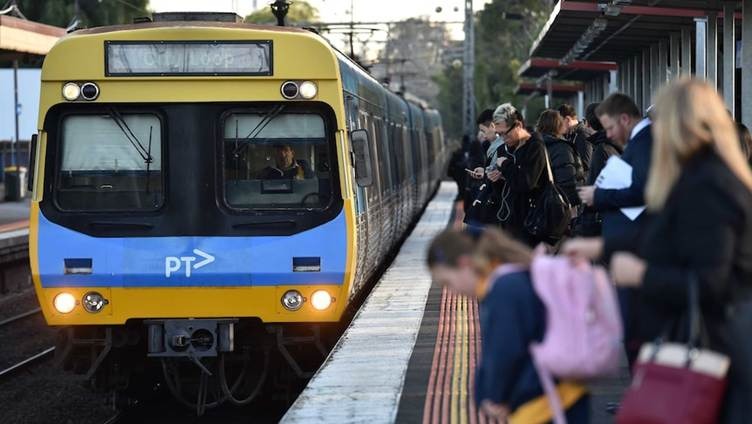
Fig 1. Tracey Nearmy.
Short-run effects: Restoring welfare
Taking a simple microeconomic approach, cars and public transport are imperfect substitutes that can replace one another to some extent. The price of petrol has risen significantly, resulting in a movement along the demand curve, meaning people are willing to purchase less petrol than they were at the lower price. However, petrol is a necessity good with inelastic demand, i.e., the amount of petrol that people are willing to purchase does not change substantially with an increase in price. The burden of the price increase then falls on consumers; the government aims to reduce the associated welfare loss by making public transport free.
Myki fares are capped at $11.40 a day, with a full-fare, five-day-a-week ticket saving commuters around $250 for the month and commuter households saving up to $500 on estimation. Consumers whose willingness to pay exceeds zero thus gain surplus or welfare in choosing to commute over driving; there is now both a loss of surplus from increased petrol prices and a gain in surplus from the removal of Myki fares. Therefore, the policy partially offsets the higher cost of petrol; consumer welfare is restored, but only to an extent, as cars and public transport are not perfect substitutes. Consumer travel decisions depend on a variety of other factors including accessibility and the nature of the trip; that is, surplus gained from the policy is dependent on who gets on board.
An ‘immediate step’: Long-run macro implications
The Allan government has framed the removal of Myki fares as an ‘immediate step’ mitigating the cost-of-living crisis while long-term solutions continue to be developed. Given the public transport system cost $3.2 billion in the last financial year, with $736 million funded by Myki fares, Public and Active Transport Minister Gabrielle Williams anticipates the policy will impact the government budget by over $70 million in foregone revenue. The Parliamentary Budget Office affirmed the cost as approximately $79.4 million. While Victorian Treasurer Jaclyn Symes remains ‘very confident of a surplus’ upon conclusion of the month, the policy may potentially lend itself to slight issues of short-termism and crowding out.
Short-termism is the excessive concentration on short-term results at the expense of long-term interests, potentially leading to macroeconomic imbalances followed by a sudden economic downturn. This is typically observed in firms and corporations but may be applicable to an extent in this case; targeting the ‘immediate’ may contribute to a broader pattern of government spending that decentres the Reserve Bank of Australia’s long-run objective of maintaining a stable interest rate. While a one-month policy is small in scale, RBA governor Michele Bullock has warned that recent government spending has already applied pressure on the central bank, causing an increase in interest rates for the first time in two years. Personally, I’m definitely not interested in applying any pressure on the RBA…
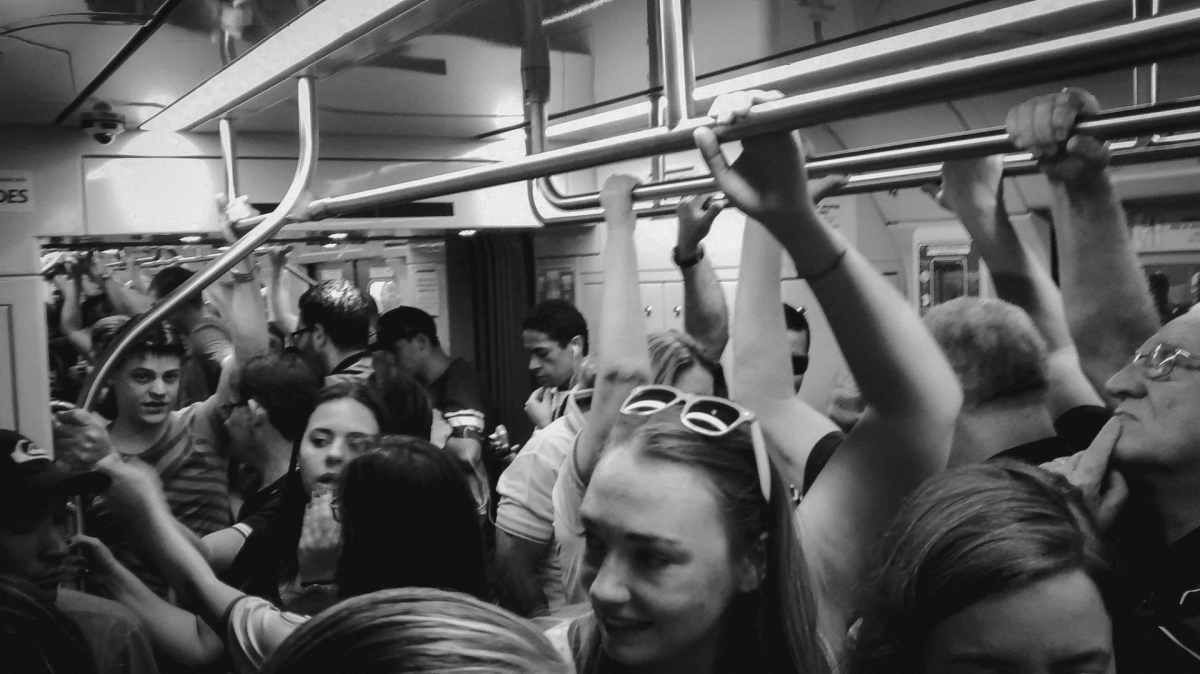
Fig. 2. Fernanda Maciel, Public Transport, 2025.
We observe the crowding out effect when increased government spending and borrowing reduces private sector investment and consumption (and perhaps when the tram is ridiculously packed due to this policy..). Notably, government spending has reached its peak in the last four decades excluding the pandemic, making up around 26.9 per cent of the economy. This is a broader issue that this one-month policy only affects rather than causes. Intuitively, increased government spending leads to a larger budget deficit with higher government demand for borrowing, pushing the interest rate up. Heightened competition for loanable funds between the government and the private sector, in conjunction with an increased interest rate, decreases private investment.
Crowding out is more likely to occur when the economy is at full employment and resources are scarce. The current oil shortages, at their peak on March 28 of this year, saw 42 Victorian service stations without petrol and 99 without diesel. Scarcity induces higher input costs, resulting in increased prices; this tends to decrease private sector consumption. Overall, it would definitely not fare well if a policy enabling free public transport was extended interminably.
‘No free lunch’
The issue faced by the government was that demand for petrol was inelastic; people needed to fuel their cars to drive places in order to work, spend money, and be active participants of the economy. Thus, it was unrealistic to expect petrol consumption to plummet despite rapidly increasing prices. The subsequent welfare loss needed to be mitigated.
Ultimately, there was no win-win solution – no free lunch, one could say. It is a grey area in policy with two out of five states, Victoria and Tasmania, adopting the approach of free public transport. Therefore, we cannot say that this one-month policy is rooted in short-termism or alone crowds out private sector spending. We certainly cannot say that the policy is going to restore social welfare or even have a significant impact on it. For now, we can only acknowledge the trade-offs, and, of course, take advantage of two month where we no longer have to scout for AOs on the tram.
Cover image: Andie Noonan, ABC News
References
ABC News. “Free Public Transport in Victoria through April as Fuel Prices Continue to Climb.”
CFA Institute. “Short-Termism.” Issue brief, 2019. https://rpc.cfainstitute.org/policy/positions/short-termism
Christou, William. “US Officials Claim Iran Unable to Find Mines It Laid in Strait of Hormuz, report says.” The Guardian, April 11, 2026. https://www.theguardian.com/world/2026/apr/11/iran-us-strait-of-hormuz-mines
Durkin, Patrick. “Victorian Government announces Free Public Transport.” Australian Financial Review, March 28, 2026. https://www.afr.com/politics/federal/victorian-government-announces-free-public-transport-20260328-p5zjkh.
Haghani, Mohsen, Neda Nassir, and Iman T. Sarteschnizi “Is Free Public Transport a Good Idea? It Depends on Who Gets on Board.” The Conversation, April 2, 2026. https://findanexpert.unimelb.edu.au/news/150873-is-free-public-transport-a-good-idea%3F-it-depends-on-who-gets-on-board
Havranek, Tomas, Zuzana Irsova, and Karel Janda. “Demand for Gasoline is More Price-Inelastic Than Commonly Thought.” Energy Economics 34, no.1: 201-207. Elsevier, 2012. https://doi.org/10.1016/j.eneco.2011.09.003
Jurkovic, Lucy. “Government Spending Putting Pressure on Inflation: Bullock.” Australian Financial Review, February 6, 2026. https://www.afr.com/policy/economy/government-spending-putting-pressure-on-inflation-bullock-20260206-p5o06c
Olersinski, Bartosz, Piotr Opala, Mateusz Rozkrut, and Andrezj Toroj. “Short-Termism in Business: Causes, Mechanisms and Consequences.” EY Poland Report, 2014. https://www.ey.com/content/dam/ey-unified-site/ey-com/en-pl/services/economic-analysis-team/documents/ey-short-termism_raport.pdf