


The terms ‘stealth wealth’, ‘frugal chic’, and ‘quiet luxury’ have crept and whispered their way into fashion and lifestyle discourse in recent years.
[Sarah is a third year Law and Commerce student at Monash University, majoring in Economics. As a Publications Officer for ESSA, Sarah is eager to combine her academic interest in microeconomics with her fascination with pop culture and explore real world economic phenomena.]

Beneath layers of high-quality textiles and behind neutral shades lie a promise that by adopting a minimalist fashion style, anyone can achieve the nonchalance and legitimacy of the ultra-wealthy. Empirically speaking, the trend of quiet luxury has come and is slowly fading away (Roytburg, 2025). Nonetheless, this article will explore how dupe culture and the rise of quiet luxury has had tangible economic impacts, reshaping the market for Veblen goods and challenging the power of wealth signalling.
What are Veblen goods?
The law of demand is intuitive: an increase in price leads to a decrease in demand. However, Veblen goods are a subset of luxury goods that exhibit perverse demand: when their prices increase, demand also increases. Where ordinary luxury goods are characterised by high income elasticity, Veblen goods experience positive price elasticity. In other words, a consumer who receives a pay increase may splurge on a luxury good, while a consumer may purchase a Veblen good despite, or even, because of its high cost. Veblen behaviour is closely tied with ‘conspicuous consumption’, with price functioning not just as a way for businesses to maximise profits, but also as social markers (Sup de Luxe, 2025).
It follows that the price of Veblen goods does not necessarily reflect their quality, but rather their purchaser’s wealth, or as ‘trophies of success’ (Roytburg, 2025). Think the Hermès Birkin, luxury cars, luxury watches … the list goes on. These goods are priced to widen the gap between the wealthy and the general public. It is hence axiomatic that the higher the price and the more exclusive the good, the more powerful the wealth signalling effect is for consumers.
Dupe culture and the demise of luxury
In recent years, the seemingly immutable gap between the wealthy and the general public has been challenged by the embrace of dupe culture. Spurred on by social media channels and algorithms, young consumers are increasingly discovering and opting for cost-effective alternatives to high-end goods, dramatically decreasing brand loyalty (Barton et al., 2025). Why should someone spend thousands of dollars on a luxury bag when they can acquire a virtually identical bag at a fraction of the price? After all, most people will not possess the expertise to distinguish between the duplicate and the original, enabling even the average layperson to obtain the prestige associated with Veblen goods without shouldering its accompanying financial burden. Luxury has now become democratised, with its increasingly egalitarian character eroding its signalling value.
Amongst the general populace, dupes are lauded as innovative and economically sound. Amongst the wealthier echelons, however, dupes are derided for their contribution to the demise of the luxury sector. According to Entrupy’s 2025 Annual Report, Louis Vuitton, Gucci, Chanel, Prada, and Dior make up the top 5 most-faked brands. This is not surprising: the higher the price tag and the bigger the Veblen effect, the more conspicuous the good is, and the more demand there is for a cheaper version. This phenomenon has created a ‘trust crisis’, with even heritage luxury brands scrutinised for the authenticity of their products (Entrupy, 2025).
The shift towards quiet luxury
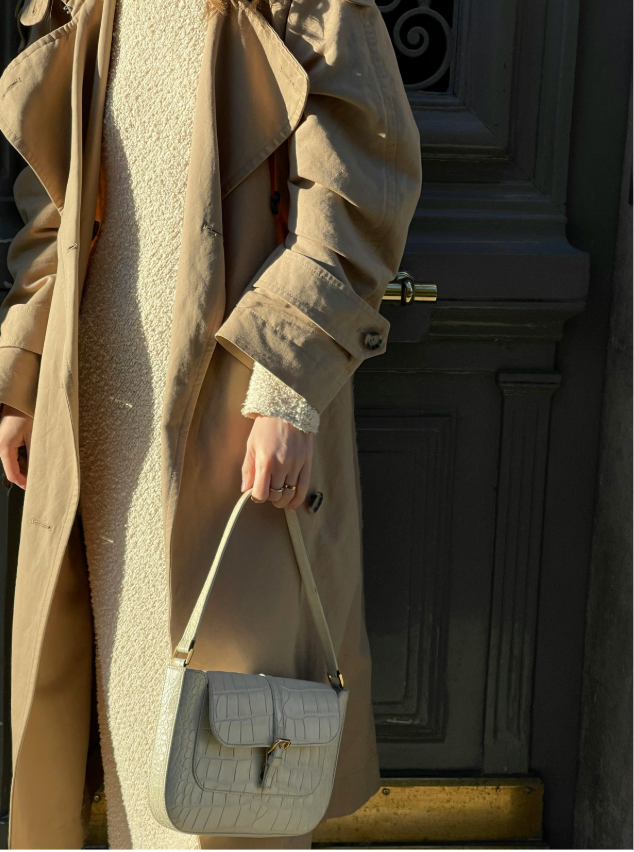
It is not hard to see why duping culture has given impetus to the shift towards quiet luxury. Quiet luxury prioritises high-quality materials and austere palettes, and eschewes logos and flamboyance.
For the general population, quiet luxury represents a trend similar to minimalism. Through mindfully curating a wardrobe of basics and investing in timeless pieces, the ordinary consumer rebels against overconsumption (Grant, 2025).
Within wealthy circles, quiet luxury is seen as a form of cultural capital. To the common eye, a sweater may appear to be good quality because it has a nice colour and feels soft to touch. But this common eye will never have the cultural literacy to understand that the sweater is actually a $3000 Brunello Cucinelli piece made in Italy, let alone make a dupe of it.
This presents an interesting exception to Thorstein Veblen’s theory of conspicuous consumption — against the backdrop of dupe culture, inconspicuous consumption patterns allow certain individuals to demonstrate their connoisseurship, producing stronger wealth-signalling effects than traditional Veblen goods (Berger & Ward, 2010).
The effects on the luxury market are evident. The once indomitable personal luxury sector has faced significant headwinds in recent years. LVMH, the world’s largest luxury goods conglomerate, reported a full-year revenue down 5% from the previous period (Otto, 2026), and the luxury sector experienced severe revenue contractions in 2024, for only the second time since the Global Financial Crisis (Badoy, 2025). In contrast, quiet luxury brands like Brunello Cucinelli reported double-digit growth just a year later (Burney, 2025). Although it is unclear whether luxury brands themselves will substantially accommodate the shift towards quiet luxury, the demand-side effects are already apparent.
Conclusion
While quiet luxury has helped many to upgrade their style and reduce overconsumption, it is also a sobering reminder of the disparity between the ultra-wealthy and the general public. For the average consumer, the aesthetic of quiet luxury is aspirational. For the wealthy, quiet luxury is intentional. No matter how much you curate your wardrobe, those who know will know. So the next time you are itching to purchase a luxury good, consider: are you purchasing higher quality or are you paying a premium for social reassurance?
References
Badoy, E. (Host). (2025, November 13). In the Lap of Luxury [Audio podcast episode]. In Research @ Citi Podcast. Citi. https://www.citigroup.com/rcs/citigpa/storage/public/Research_Citi_E55_In_The_Lap_of_Luxury_TRANSCRIPT.pdf
Barton, C., Nayak, M., Boger, S., Seara, J., & Raemdonck, G. (2025, October 29). How Gen Z and Gen Alpha Are Rewiring the Fashion Industry. Boston Consulting Group. https://www.bcg.com/publications/2025/how-gen-z-gen-alpha-rewiring-fashion-industry
Berger, J., & Ward, M. (2010). Subtle Signals of Inconspicuous Consumption. Journal of Consumer Research, 37(4), 555. https://doi.org/10.1086/655445
Burney, C. (2025, July 11). Quiet luxury reigns supreme as Brunello Cucinelli reveals double-digit growth. The Industry Fashion. https://www.theindustry.fashion/quiet-luxury-reigns-supreme-as-brunello-cucinelli-reveals-double-digit-growth/
Entrupy. (2025). State of Fake. https://www.entrupy.com/report/state-of-the-fake-report-2025/
Grant, M. (2025, December 6). The Rise of Quiet Luxury in 2025: Why Minimalism Is Taking Over Fashion. AMagazine. https://theamag.com/11575/fashion/the-rise-of-quiet-luxury-in-2025-why-minimalism-is-taking-over-fashion/
Hinchliffe, E., & Ajemian, N. (2024, November 19). Eileen Fisher zeroes in on the millennials and Gen Z shoppers who love ‘slow fashion’ and ‘quiet luxury’. Fortune. https://fortune.com/2024/11/19/eileen-fisher-zeroes-in-on-the-millennials-and-gen-z-shoppers-who-love-slow-fashion-and-quiet-luxury/
Otto, M. (2026, February 4). LVMH post-earnings review: 2025 results beat forecast, 2026 outlook cloudier. S&P Global. https://www.spglobal.com/market-intelligence/en/news-insights/research/2026/02/lvmh-post-earnings-review-2025-results-beat-forecast-2026-outlook-cloudier
Roytburg, E. (2025, November 9). For Gen Z, quiet luxury is dead—they’re packing lunch at home while shelling out on conspicuous consumption. Fortune. https://fortune.com/2025/11/09/gen-z-coach-bags-luxury-chipotle-cava-sweetgreen-ralph-lauren-christmas/ Sup de Luxe. (2025, April 17). The Veblen effect in luxury: high prices boost brand appeal. https://www.supdeluxe.com/en/luxury-news/veblen-effect-luxury-high-prices-boost-brand-appeal
Sup de Luxe. (2025, April 17). The Veblen effect in luxury: high prices boost brand appeal. https://www.supdeluxe.com/en/luxury-news/veblen-effect-luxury-high-prices-boost-brand-appeal
