

Fast fashion is widely criticised for its ethical issues, yet many consumers continue to rely on it due to its affordability. Wouldn’t it seem reasonable to assume that cheaper, more accessible clothing would reduce how often people purchase?
[Annie Phan is a second-year Law and Commerce student majoring in Economics, with a strong interest in global economic systems and international relations. She hopes to deepen her understanding of how economic incentives shape human behaviour and drive real-world outcomes across societies.]
However, the opposite is evident. Since 2000, fast fashion production has roughly doubled, while the average garment is worn about 35% less than it was 15 years ago, indicating that consumption has increased while use per item has declined (Igini 2023).
This presents a clear paradox: if lower prices encourage greater consumption, why does each additional purchase provide less satisfaction?
Price, Elasticity, and Quantity Over Quality
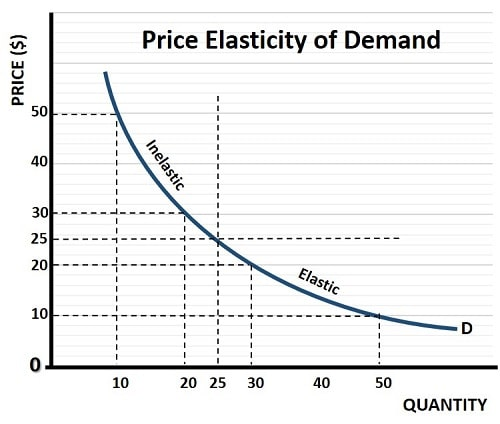
The flatter section of the demand curve on Figure 2 demonstrates that demand is elastic, where consumers are highly responsive to price changes. In this range, a small decrease in price leads to a larger increase in quantity demanded (Bain 2020). The paradox of fast fashion operates in this elastic region: rather than simply saving money, consumers respond to lower prices by purchasing more items, locking themselves into a cycle of overconsumption.
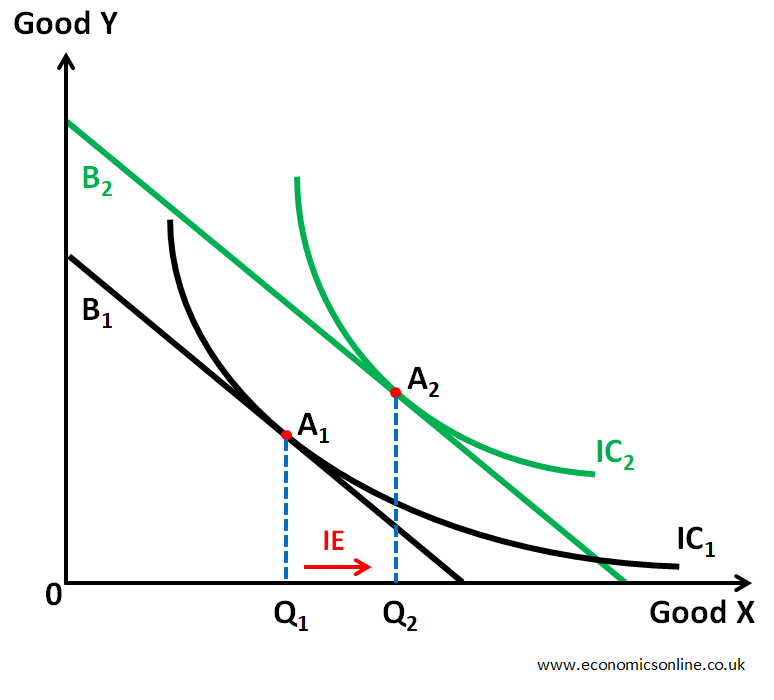
In Figure 3, Good X represents clothing and Good Y represents all other goods. When clothing prices fall, the budget constraint shifts outward, giving consumers greater real purchasing power. As a result, consumers move from A₁ to A₂, increasing the quantity of clothing they buy from Q₁ to Q₂ and reaching a higher indifference curve (Ansari 2020).
While this suggests higher utility, it does not necessarily translate into greater satisfaction in reality. Instead, lower prices tend to shift behaviour from buying better-quality items to buying more items overall. This is reflected in Australian consumer patterns, where people purchase around 56 clothing items each year at relatively low prices (Redman 2024).
Behavioural Economics of Fast Fashion Consumption
Cheaper prices do more than increase how much people buy; they also shape how those decisions are made. When something costs very little, the risk of regretting the purchase feels low, so consumers are more likely to buy on impulse. Research from Glasgow Caledonian University suggests that fast fashion purchases are often driven by short-term emotional gratification rather than genuine need, producing a brief “dopamine rush” at the point of purchase (Gupta and Grioli 2022). As a result, lower prices tend to encourage more frequent, spur-of-the-moment purchases that prioritise immediate reward over longer-term value (Gawior, Polasik, and del Olmo 2022).
While low prices drive higher consumption, behavioural factors help explain why it persists. Hedonic adaptation means that the satisfaction from a purchase fades over time, as clothing that once felt new and desirable becomes part of the everyday and less valued (He et al. 2024). Fast fashion intensifies this process by speeding up trend cycles and fuelling social comparison, as individuals feel pressure to keep up with constantly changing styles. This pressure is further amplified by social media, where rapid trend diffusion normalises frequent wardrobe updates (Cherry 2024). Although it may seem that each additional purchase should bring greater satisfaction, and perhaps motivate continued buying, the concept of diminishing marginal utility suggests the opposite (Svartdal et al. 2021).
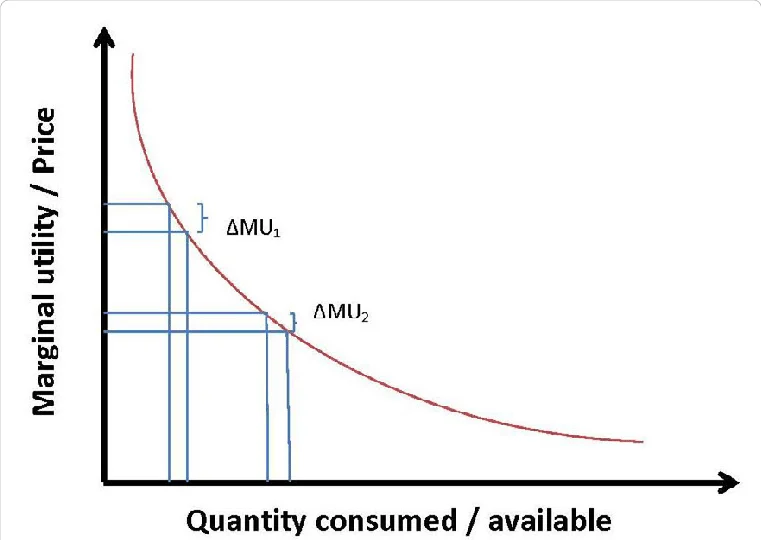
Illustrated in Figure 4,, utility declines from ΔMU₁ to ΔMU₂, showing that the satisfaction gained from initial purchases diminishes as quantity consumed increases. In economics, utility refers to the benefit derived from consuming a good, capturing both the satisfaction it provides and how well it fulfils a want or need. The emotional satisfaction discussed above can therefore be understood through this concept of utility, which reflects the benefit consumers derive from consumption.
Figure 4 shows this paradox clearly: as clothing becomes more affordable, people buy more, but the utility gained from each additional purchase declines. The behavioural factors discussed above keep consumers buying, yet in doing so they move further down the curve rather than gaining more satisfaction. This highlights a flaw in the idea that lower prices always lead to better outcomes. For fast fashion consumers, cheaper clothing does not necessarily improve welfare; it often just creates the impression of it, as people follow trends and try to fit in.
When Prices Fail to Reflect True Costs
Fast fashion’s impact extends far beyond what consumers see at the checkout. Its low prices are sustained by hidden environmental and social costs. Since 2000, global clothing production has doubled, yet garments are worn fewer times, accelerating textile waste and landfill (Mishra 2025). The industry is also a major contributor to carbon emissions and water pollution (Li et al. 2024). To keep prices low, supply chains often rely on low wages and unsafe working conditions (Galan 2025), while overproduction leads to large volumes of clothing being quickly discarded. Although fast fashion appears affordable, its true costs are shifted onto the environment and workers, meaning prices fail to reflect the real economic and human toll of consumption.

Conclusion: Are Cheap Clothes Really Making You Better Off?
Fast fashion reveals a paradox at the heart of modern consumption: as clothing becomes more affordable, it is valued less. Rather than making consumers better off, lower prices sustain a cycle of overconsumption, diminishing satisfaction, and hidden costs. If prices continue to obscure the true cost of production, this cycle will only persist, raising the question of whether these purchasing patterns genuinely improve consumer welfare or simply encourage continued consumption.
References
Badoy, E. (Host). (2025, November 13). In the Lap of Luxury [Audio podcast episode]. In Research @ Citi Podcast. Citi. https://www.citigroup.com/rcs/citigpa/storage/public/Research_Citi_E55_In_The_Lap_of_Luxury_TRANSCRIPT.pdf
Barton, C., Nayak, M., Boger, S., Seara, J., & Raemdonck, G. (2025, October 29). How Gen Z and Gen Alpha Are Rewiring the Fashion Industry. Boston Consulting Group. https://www.bcg.com/publications/2025/how-gen-z-gen-alpha-rewiring-fashion-industry
Berger, J., & Ward, M. (2010). Subtle Signals of Inconspicuous Consumption. Journal of Consumer Research, 37(4), 555. https://doi.org/10.1086/655445
Burney, C. (2025, July 11). Quiet luxury reigns supreme as Brunello Cucinelli reveals double-digit growth. The Industry Fashion. https://www.theindustry.fashion/quiet-luxury-reigns-supreme-as-brunello-cucinelli-reveals-double-digit-growth/
Entrupy. (2025). State of Fake. https://www.entrupy.com/report/state-of-the-fake-report-2025/
Grant, M. (2025, December 6). The Rise of Quiet Luxury in 2025: Why Minimalism Is Taking Over Fashion. AMagazine. https://theamag.com/11575/fashion/the-rise-of-quiet-luxury-in-2025-why-minimalism-is-taking-over-fashion/
Hinchliffe, E., & Ajemian, N. (2024, November 19). Eileen Fisher zeroes in on the millennials and Gen Z shoppers who love ‘slow fashion’ and ‘quiet luxury’. Fortune. https://fortune.com/2024/11/19/eileen-fisher-zeroes-in-on-the-millennials-and-gen-z-shoppers-who-love-slow-fashion-and-quiet-luxury/
Otto, M. (2026, February 4). LVMH post-earnings review: 2025 results beat forecast, 2026 outlook cloudier. S&P Global. https://www.spglobal.com/market-intelligence/en/news-insights/research/2026/02/lvmh-post-earnings-review-2025-results-beat-forecast-2026-outlook-cloudier
Roytburg, E. (2025, November 9). For Gen Z, quiet luxury is dead—they’re packing lunch at home while shelling out on conspicuous consumption. Fortune. https://fortune.com/2025/11/09/gen-z-coach-bags-luxury-chipotle-cava-sweetgreen-ralph-lauren-christmas/ Sup de Luxe. (2025, April 17). The Veblen effect in luxury: high prices boost brand appeal. https://www.supdeluxe.com/en/luxury-news/veblen-effect-luxury-high-prices-boost-brand-appeal
Sup de Luxe. (2025, April 17). The Veblen effect in luxury: high prices boost brand appeal. https://www.supdeluxe.com/en/luxury-news/veblen-effect-luxury-high-prices-boost-brand-appeal