
Maya Farswan (ESSA Unimelb)
If you had told me 5 years ago that putting snail mucin on my face would be a part of my daily morning ritual, I would have laughed in your face.
Now here we are, half a decade later, and what once felt bizarre is now completely normal. Korean skincare products have gone from niche to mainstream, dominating shelves from local pharmacies to global retailers like Sephora.
But behind the serums and creams is something far more intriguing: a country that has successfully turned skincare into a global economic force. Driven by strong export growth, product differentiation and the global influence of Korean culture, what started as a niche trend has evolved into a billion-dollar industry.
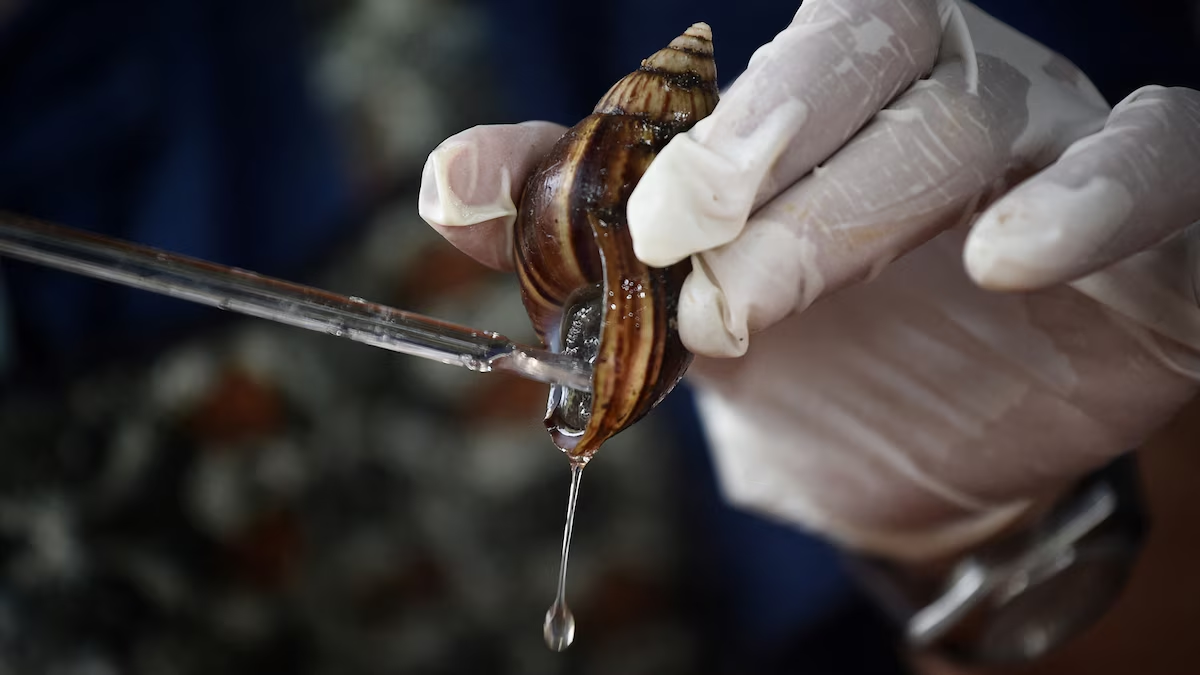
Figure 1: Innovation sets K-beauty apart (Source: National Geographic).
So where did it all start?
The roots of South Korea’s global beauty dominance can be traced all the way back to the aftermath of the 1997 Asian Financial Crisis. Alongside countries like Thailand and Indonesia, South Korea suffered a severe lack of economic stability. South Korea had weak financial institutions, characterised by poor government-directed lending practices. Foreign creditors became reluctant to roll over short-term loans, and by no surprise, the won took a hit. South Korea had no choice but to accept an International Monetary Fund (IMF) bailout of $36 billion as a part of a larger $100 billion international rescue effort.
In an effort to re-strengthen South Korea’s presence in the global market, incoming president Kim Dae Jung had a plan – a plan to shift away from debt-driven growth and towards a more sustainable, export-oriented strategy. His goal was to focus on growing Korea’s pop-culture as a form of soft power, rather than relying on heavy industry for economic growth. By implementing the ‘Hallyu Industry Support Development Plan’ as a recession recovery method, the president increased government spending on culture from $14 million in 1998 to $84 million in 2001.
The increased investment towards Korean culture wasn’t due to the government simply being patriarchal, but instead, they saw the opportunity of using culture as a vehicle for soft power and took it. Before they knew it, the benefits of investing in Korea’s entertainment industry would spill over to third parties, a perfect example of a positive externality. Whilst Korean film production companies were not directly producing skincare, cosmetic firms such as COSRX reaped the economic benefits of their content regardless. By no surprise, the rise of K-pop and K-drama’s was shortly followed by the boom of the cosmetic industry.
Exportation
South Korea restructured its economy and shifted towards export-led growth, with the government relieving taxes for export-only companies. This effectively lowered the marginal costs of production for many K-beauty firms, increasing the profitability of each additional unit of skincare produced. As a result, firms were incentivised to increase output, leading to a rightward shift in the supply curve and a rise in the quantity supplied to global markets.
Between 2020 and 2024, Korean total cosmetics exports increased from USD 7.57 billion to USD 10.23 billion, demonstrating the significant influence K-beauty was having over other parts of the world. Whilst this is largely attributed to a growth in consumer demand, the government’s tax incentives demonstrate the highly supportive environment present which allowed Korean cosmetics to scale rapidly and compete globally.
This expansion has further enabled firms to benefit from economies of scale, as higher production levels reduce the average costs per unit for firms, allowing firms to reduce their prices to become more price-competitive. Lower prices increase consumer demand, allowing the K-beauty industry to glow against its other global competitors.
What makes K-Beauty different?
Today, there are thousands of skincare brands, all competing on the same TikTok algorithm over who will be dominating the ‘For You’ page. So how were South Korean beauty brands like COSRX, Laneige and Beauty of Joseon able to succeed?
It all comes down to product differentiation. As crazy as snail mucin and green tea skincare sounded off the bat, this is what ultimately got us to stop scrolling to the next video.
The competition within the beauty industry is no doubt a monopolistic one. Whilst the products in this competition are all more or less alike in some way, each brand offers something unique – whether that be an exotic ingredient or visually-appealing branding. With Western beauty brands primarily focusing on exfoliation, Korean labels emphasise how hydration is key to achieving that ‘glass-skin’ look that everybody apparently wants these days. As the products in the market are not perfect substitutes, Korean firms have some degree of pricing power and can charge slightly higher prices, whilst simultaneously building brand loyalty. The uniqueness of K-beauty brands is ultimately what sets them apart from other global skincare brands, and hence defines its success in this monopolistic competition we call the beauty industry.
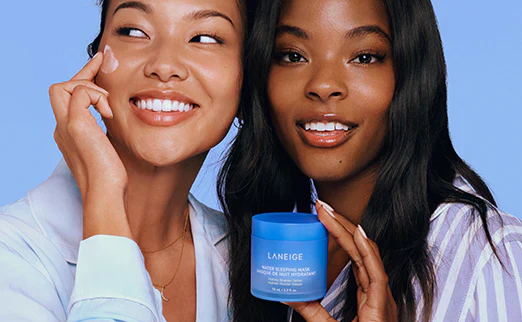
Figure 2: K-beauty brand appeal to consumers world wide (Source: Laneige)
Conclusion
From the lows of the recession to the highs of Sephora shelves, South Korea’s dynamic beauty industry is no doubt an economic success story. Just like how there are layers behind each step of your glass skin-care routine, there are layers to K-beauty’s global dominance – all backed up by an economic strategy. The combination of calculated government intervention, export-led growth strategy, monopolistic competition, and the undoubtedly spillover effects of cultural soft power is what made K-beauty the economic powerhouse it is today.
Perhaps the most important takeaway for economists is just how interconnected these forces are. Hallyu shifted consumer preferences at a global scale, creating increased demand irrespective of advertisements. Minimising export taxes were a tax incentive for suppliers, boosting exports. Product differentiation gave K-beauty firms pricing power in a competitive market. None of these factors alone would have been sufficient. It was the combination of each force which accumulated to something genuinely unprecedented.
So the next time you reach for the green tea serum lying in your cupboard, know that there’s a story behind the pretty packaging. A story about government policy, soft power, and monopolistic competition — all mixed in a very aesthetically pleasing bottle.
Cover image: Saranghae Switzerland
References:
Department of Foreign Affairs and Trade. “Korea Rebuilds: From Crisis to Opportunity.” Australian Government, https://www.dfat.gov.au/about-us/publications/trade-investment/korea-rebuilds/Pages/korea-rebuilds-from-crisis-to-opportunity-3.
IMF Staff. “The Asian Crisis: Causes and Cures.” Finance & Development, vol. 35, no. 2, June 1998, The Asian Crisis: Causes and Cures.
Investopedia Staff. “Monopolistic Competition: Definition, Function, Pros & Cons.” Investopedia, https://www.investopedia.com/terms/m/monopolisticmarket.asp.
International Monetary Fund. “Republic of Korea—IMF Stand-By Arrangement.” International Monetary Fund, Dec. 1997, https://www.imf.org/external/np/oth/korea.htm.
Korea Economic Institute of America. “The Rise of K-Beauty and the Economic Implications for South Korea.” KEI: The Peninsula, 12 Jan. 2026, https://keia.org/the-peninsula/the-rise-of-k-beauty-and-the-economic-implications-for-south-korea/.
Korean Cultural Centre UK. “Hallyu (Korean Wave).” Korean Cultural Centre UK, https://kccuk.org.uk/en/about-korea/culture-and-arts/hallyu-korean-wave/.
Sellers, Stephanie, and Qingan Leasure. “South Korea’s Use of Culture as an Instrument of National Power.” War Room, U.S. Army War College, 20 Nov. 2025, https://warroom.armywarcollege.edu/articles/culture-as-national-power/.
“The Quest for Perfect Skin: The Rise of Korean Skincare.” The Science Survey, 10 Feb. 2024, https://thesciencesurvey.com/spotlight/2024/02/10/the-quest-for-perfect-skin-the-rise-of-korean-skincare/