
The Collins English Dictionary named the phrase ‘vibe coding’ as its Word of the Year in 2025 (Collins Dictionary, n.d). Despite fierce competition from other neologisms such as ‘clanker’, ‘broligarchy’, and ‘biohacking’, vibe coding’s linguistic crown is well-deserved.
Sarah Bi
ESSA Monash Clayton
[Sarah is a third year Law and Commerce (Economics) student at Monash University. As a Publications Officer for ESSA, Sarah is eager to explore social trends and phenomena through an economics lens.]

Originally coined by OpenAI cofounder Andrej Karpathy in early 2025, vibe coding refers to the act of prompting artificial intelligence (AI) with natural language to help write code. Vibe coding has since surged in popularity, functioning less as a prototyping tool and increasingly as a means for people with little to no programming experience to build entire digital platforms (MindStudio, n.d). Yet from an economic perspective, is the rise of vibe coding all good news for the software industry? Or does the apparent productivity actually conceal significant downstream costs?
The rise of vibe coding tools
Have you ever looked at your fridge and wished that you could just photograph its contents and an app would tell you what to keep and what to throw away? Maybe not, but if you did, you would traditionally have had to wait for actual software engineers to have the same idea and to bring the app into existence.
Vibe coding removes this limitation. AI-assisted creation tools such as Lovable, Cursor, and Replit allow even laypeople to create software through prompting with everyday language (Fernandez, 2025). Swedish vibe-coding startup Lovable was reported to have hit $400 million in annual recurring revenue in early 2026, while several competitors have experienced similar profitability (Dawkins & Mackenzie, 2026). Furthermore, a survey found that 84% of respondents use or intend to use AI-assisted programming in their development process (StackOverflow, 2025), while other data shows that 63% of vibe coding users are non-developers (Chan, 2026). These figures reflect the ever-growing trend of using AI to augment or replace traditional processes of software development, transforming what was once an almost Herculean task requiring years of technical expertise to a passion project that anyone could feasibly take on with enough ambition and AI credits.
Reducing barriers to innovation
The success of vibe coding has effectively democratised technological entrepreneurship and has benefits both at an individual and industry-wide level.
For the average, non-technical user, vibe coding facilitates the creation of straightforward projects that contain just enough core features to solve specific problems in their lives. Think flashcard apps, alarm clocks, digital trackers – the list goes on.
For the more ambitious individuals, vibe coding dramatically reduces the barrier to entrepreneurial experimentation by stripping away the inhibiting factor of coding ability. Original ideas that would have died through inaction are now capable of being realised without requiring their creators to know a single programming language. If it can be imaged, it can likely be vibe coded. And if the product is not satisfactory? Just keep prompting. After all, the most natural coding language is simply plain English.
Finally, for the seasoned engineers and developers who code for a living, the benefits are perhaps even more pronounced. Major business software company Intuit estimated that efficiency gains from active AI usage by its engineers could reach 40% (Kell, 2025). Likewise, German software company SAP rolled out an AI-assisted tool intended to accelerate workflows through embracing the principles of vibe coding, resulting in code being produced 20% faster (Kell, 2025).
Thus, once technically demanding and tedious work is now being expedited through vibe coding, with this undeniable efficiency reducing the opportunity cost of experimentation and allowing leaner teams to work effectively without requiring additional staff (Gandhi, 2026).
Vibe coding must be the best thing to happen to the software engineering industry, right? Well, not quite…
The productivity paradox
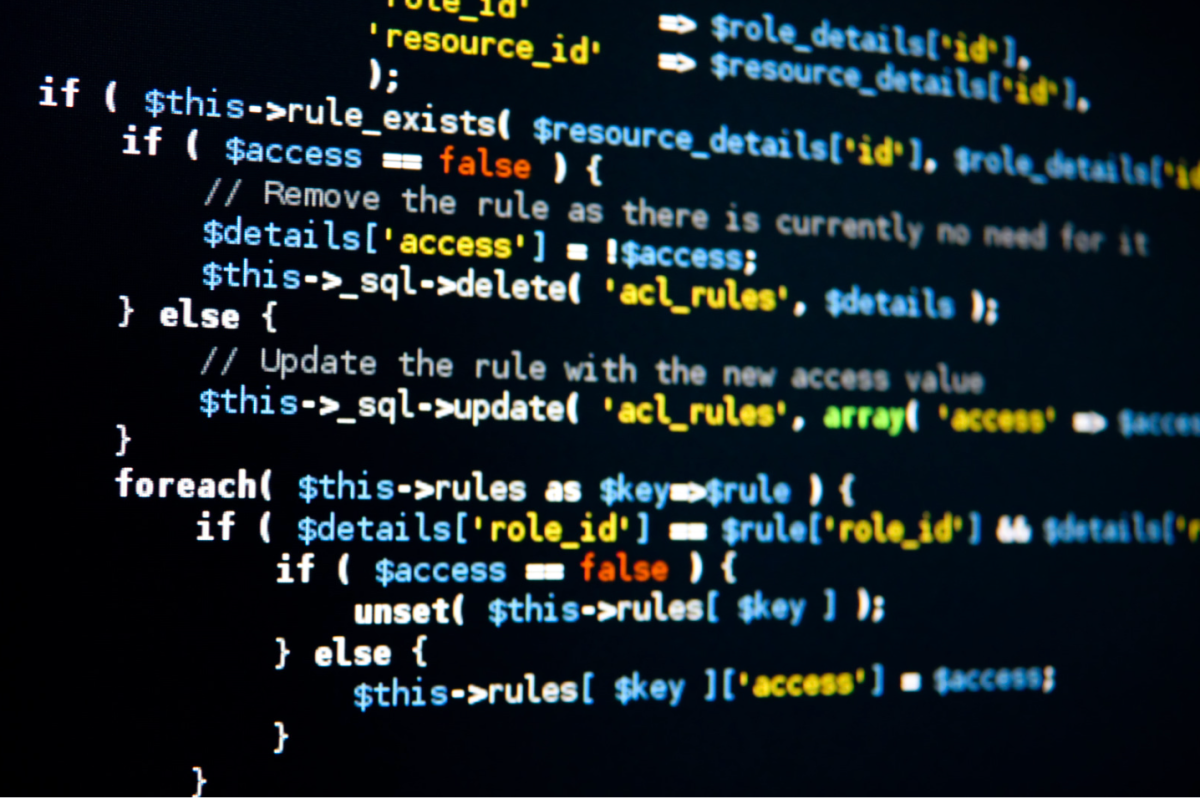
Recent data on the actual labour productivity gains derived from vibe coding are rather anticlimactic. Consulting firm Section found that 67% of nonmanagers reported that AI had saved them less than two hours, if any time at all, in the course of their work (Lapowsky, 2026). More damning evidence comes from surveys conducted by Model Evaluation and Threat Research (METR) in both 2025 and 2026 to examine the impact of AI tools on developer productivity, concluding that experienced developers suffered slowdowns in productivity when using AI in their work. The evidence therefore presents an apparent contradiction: how is it that producing code is more efficient than ever, yet developers are not experiencing gains in productivity?
Indeed, this is known as the vibe coding ‘productivity paradox’: the speed at which coding occurs has increased drastically, but the productivity of developers in completing their tasks has not increased proportionately.
The overreliance on vibe coding at the industry level creates a ‘productivity tax’. Due to the shaky foundations that vibe coded products are built upon, the extra time that developers get from delegating coding tasks to AI is then taxed by the additional time and effort required to debug errors and AI hallucinations, as well as resolve various security issues (Wondrasek, 2026). For those who fail to do the due diligence, a bottleneck often emerges where more prompting fixes one issue whilst causing several more.
Thus the adoption of vibe coding and the resulting technical debt results in intertemporal cost shifting: initial or short-term productivity gains derived from vibe coding often become deferred burdens that require future maintenance.
What now?
What began as a powerful prototyping tool has rapidly gained traction and is being used to build increasingly ambitious software. However, when the entire product is built upon intent rather than programming syntax, it is predictable that issues will arise. A more disciplined approach to AI-augmented software development is therefore required for genuine long-run productivity increases. The role of the software developer must shift from technical grunt-work to technical oversight, ensuring that workflows are designed with specificity and security. Increased AI governance will also be necessary to ensure that developers remain accountable for the software they create.
Thus, even as vibe coding generates code faster and faster, the economic value of human capital and technical knowledge is likely to increase.
Conclusion
While the neologism ‘vibe coding’ may not last forever, AI’s place in producing code is likely here to stay. Nonetheless, the winners in the emerging digital economy will be those who are capable of applying vibe coding principles conscientiously without abdicating their responsibilities of due diligence and proper governance.
References
Chan, D. (2026, April 17). Vibe coding statistics: Key data, trends, and insights for 2026. Hostinger. https://www.hostinger.com/blog/vibe-coding-statistics/
Collins Dictionary. (n.d). The Collins Word of the Year 2025 is … vibe coding. https://www.collinsdictionary.com/woty
Dawkins, M., & Mackenzie, T. (2026, March 12). Vibe-Coding Startup Lovable Hits $400 Million Recurring Revenue. Bloomberg. https://research.ebsco.com/c/jlkdad/viewer/html/jcbdhveomz
Fernandez, L. (2025, November 8). Should Marketers Jump Into Vibe Coding? CMSWire. https://www.cmswire.com/digital-marketing/should-marketers-jump-into-vibe-coding/
Gandhi, V. (2025, March 26). From vibe coding to multi-agent AI orchestration: Redefining software development. CIO. https://www.cio.com/article/4150165/from-vibe-coding-to-multi-agent-ai-orchestration-redefining-software-development.html
Kell, J. (2025, May 22). Technologists are embracing ‘vibe coding’ as they deploy more AI-enabled tools to boost productivity. Fortune. https://research.ebsco.com/c/jlkdad/viewer/html/an4zkkn3ln
Lapowsky, I. (2026, February 26). Claude Code and the Great Productivity Panic of 2026. Bloomberg. https://research.ebsco.com/c/jlkdad/viewer/html/z5s5nhsowr
METR. (2025, July 10). Measuring the Impact of Early-2025 AI on Experienced Open-Source Developer Productivity. https://metr.org/blog/2025-07-10-early-2025-ai-experienced-os-dev-study/#motivation
METR. (2026, February 24). We are Changing our Developer Productivity Experiment Design. https://metr.org/blog/2026-02-24-uplift-update/#wider-adoption-of-ai-has-made-it-more-difficult-to-measure-task-level-productivity
MindStudio. (2026, June 25). Vibe Coding vs Agentic Engineering: Google’s Spectrum Explained. https://www.mindstudio.ai/blog/vibe-coding-vs-agentic-engineering-google-spectrum
Stack Overflow. (n.d). AI 2025 Stack Overflow Developer Survey. https://survey.stackoverflow.co/2025/ai
Wardzinski, T. (2026, February 17). The uncomfortable truth about vibe coding. Red Hat Developer. https://developers.redhat.com/articles/2026/02/17/uncomfortable-truth-about-vibe-coding#
Wondrasek, J., A. (2026, January 28). Understanding Vibe Coding and the Future of Software Craftsmanship. Softwareseni. https://www.softwareseni.com/understanding-vibe-coding-and-the-future-of-software-craftsmanship/