


Australia’s productivity growth has averaged about 0.3 per cent a year over the past decade, and the familiar remedies of tax, planning and competition reform are slow and politically costly (EY, 2026). Artificial Intelligence offers something alternative, a general purpose technology arriving at scale, funded largely by private capital, with uses in almost every industry. AI will not transform the economy on its own, but evidence suggests that it could shift three specific things that have real impact. AI can alter how productive Australians are, where investment flows and what work looks like for Australians, however, gains are not automatic and therefore, the benefits are not guaranteed.
Ava Hartnett
ESSA Monash Clayton
[Ava is a third year Bachelor of Commerce (Finance) and PPE student at Monash University. She is a publications officer at ESSA and has a strong interest in finance and bridging the gap between the opportunities provided to herself and her male counterparts. She enjoys learning how government policy affects Australian’s in their day to day lives.]
Disclaimer: The views expressed in this article are those of the author and do not necessarily reflect the views of affiliated organisations.
A projected lift to growth.
EY-Parthenon modelling estimates that AI could add between $95 billion and $116 billion to the Australian economy by 2036 by lifting GDP by 2.6 to 3.2 percent (EY, 2026). The driver is a 2.0 to 2.4 percent rise in multifactor productivity, the measure of how effectively labour and capital combine. EY describes its assumptions as conservative and broadly consistent with Productivity Commission analysis (EY, 2026).
The applications are already practical. CSIRO estimates that digital innovation could deliver $315 billion in gross economic value over a decade, this points to AI being used to sequence crop genes for more resilient grains, to predict failures in infrastructure such as water pipes and the Sydney Harbour Bridge, and to forecast demand for emergency care (CSIRO, 2026). The gains are not confined to the technology sector, they reach agriculture, infrastructure and health.
The investment boom has begun.
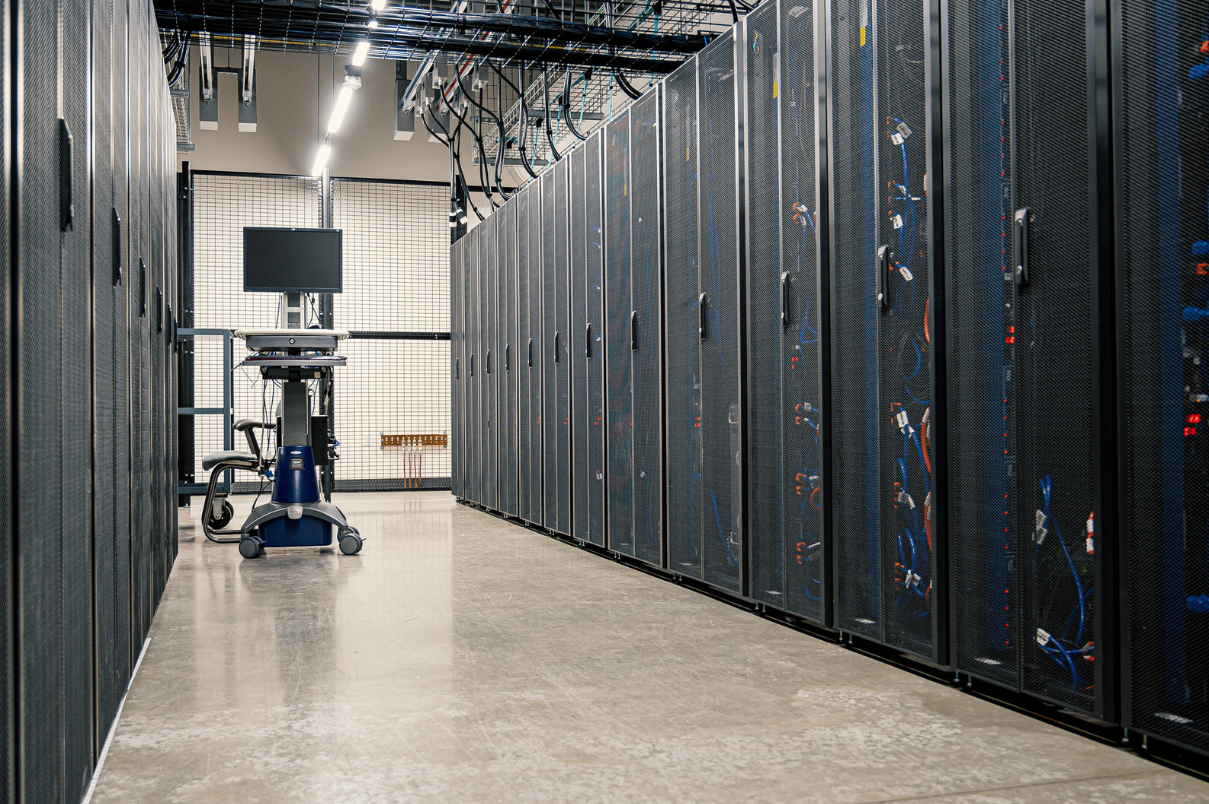
Capital has been the first to move. EY reports that the information media and telecommunications industry rose from $2 billion in 2023 to $7.4 billion in 2025, and that Australia ranked second globally for data centre investment in 2024 (EY, 2026). Its modelling projects a further $31 billion to $38 billion in investment over the coming decade as firms react to higher productivity. Australia is also one of only four Asia-Pacific nations with access to the advanced United States chips that AI development requires, which strengthens its claim on the next round of spending (EY, 2026).
The expected changes.
EY projects a net gain of 36,000 to 44,000 full-time equivalent jobs, with roles lost to restructuring more than offset by new ones (EY, 2026). Construction, wholesale and retail trade are expected to grow, whilst agriculture and mining are expected to record small reductions through automation. Employers appear to be planning accordingly with 44% of Australian chief executives ranking large-scale reskilling as a top workforce priority, against 20% who prioritise reducing hiring (EY, 2026). The distribution matters more than the total. The Parliamentary Library notes that managers and professionals record the highest AI exposure, so this wave reaches well beyond routine work (Parliament of Australia, 2025). It also warns that difficult transitions may fall disproportionately on women. Australian women record an AI skills penetration of 0.37, against an OECD average of 1.0 (Parliament of Australia, 2025).

Gains are not automatic.
None of these changes are guaranteed. Adoption is shallow and uneven, with only 35% of large companies using AI in 2024-2025, compared with 11% of small and micro businesses. EY notes that productivity gains from new technology have historically taken five to ten years to be widely implemented, as firms must first redesign processes and retrain staff.
There are also physical limits to the growth of AI. Data centres draw about 2% of grid supply, and that demand is expected to triple within five years (EY, 2026). The Federal Government has announced plans to legislate standards requiring large data centres to supply at least as much energy as they consume, while slow project approvals risk diverting investment elsewhere.
The benefits may also not distribute themselves. The Parliamentary Library warns that if AI is controlled by a few large firms its benefits may not translate into higher productivity across the broader economy or lower prices for consumers. Public confidence is also lagging, with 81% of Australians surveyed wanting stronger rules on how organisations use AI (Parliament of Australia, 2025).
Some savings due to AI are additionally, simply just costs moved elsewhere. Submissions to the Joint Select Committee on AI (Politico, 2026), suggest AI could make legal advice cheaper while making courts more expensive, and lift retail efficiency while increasing workers compensation claims. Data centre construction is also expected to compete with housing for electricians, electricity and water. A saving for one organisation can become a bill for another (Politico, 2026).
AI can reshape the economy. Whether it does will depend less on the technology and more on the decisions businesses and governments make in regards to AI implementation over the next few years.
References
CSIRO. (2026). Capturing the benefits of AI. CSIRO. https://www.csiro.au/en/research/technology-space/ai/about
Heath, R. (2026). AI promises to save Australia money. Here are the costs nobody talks about. POLITICO. Ai-promises-to-save-australia-money-here-are-the-costs-nobody-talks-about-01106483
Horden, N., et al. (2026). The economic upside of Artificial Intelligence for Australia. EY. the-economic-upside-of-ai-for-australia
Parliament of Australia. (2025). Potential impact of Artificial Intelligence (AI) on the Australian workforce. Parliament of Australia. potentialimpactofArtificialIntelligence


