


As malatang stores take over the streets of busy cities, have you ever wondered why it has become so popular? Have you ever thought about how you should open up a store yourself so you can always have a nice bowl whenever you feel like it? You’re not alone.
[Triet Ngo is an engineering and commerce student, and is currently in ESSA as a writer. He has a keen interest in learning about and understanding the why behind markets and the link between consumer behaviour and market movement. He enjoys working with models and aspires to explore all things economics related.]
When you walk through Melbourne’s CBD, Asian suburbs or even some eerie alleyways, you’re bound to catch the flavourful aroma of malatang drifting through the air. If you don’t know what malatang is by now, you might be seriously missing out. Originating from China, malatang offers a cheaper, DIY model for hot pot, where customers decide from an abundant choice of protein, vegetables and noodles, and finish with a choice of broth. Its literal translation, “numbing spicy boil”, paints a perfect picture of what you are getting into when you sit down at one of these restaurants, unless you elect for a non-spicy base.
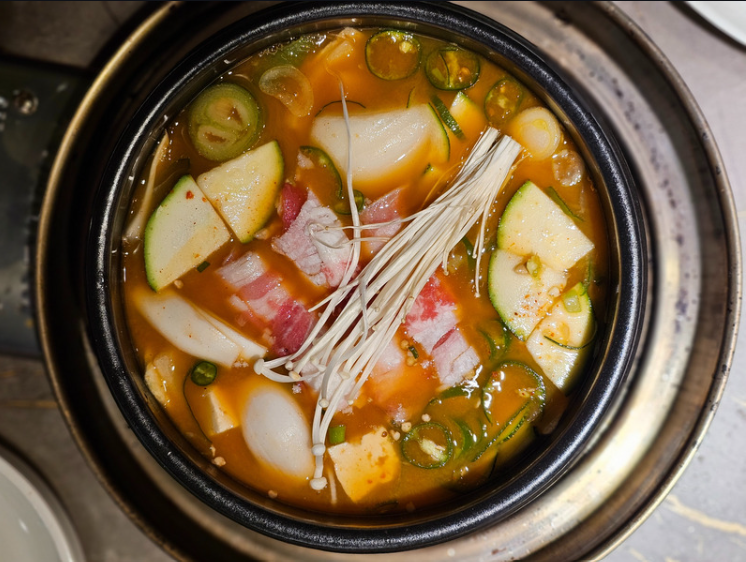
Recent Memory of the Malatang Market
Malatang’s popularity has been showing exponential growth, with its online searches climbing roughly 2 times its value in Australia and 8 times its value globally since 2022 (Google Trends, 2026). Store counts are climbing as well, with new malatang stores and brands opening everywhere (e.g., Dragon Hot Pot, Zhangliang Malatang, Yang Guofu Malatang and David’s Master Hot Pot). Particularly, the malatang expansion rode the wave of surplus consumer spending as households scratched their itch to dine out after being subjected to quarantine. Although escaping lockdown brought with it high inflation, followed by high interest rates and tougher economic conditions, discretionary spending still grew in Australia since 2022 (Australian Bureau of Statistics, 2026), owing to increased savings during lockdown from welfare support and spending constraints, and a lag between monetary policy changes and their effect on the economy (The Australian Economic Review, 2023). Consequently, food services such as malatang that offered a product which households had been craving reaped the benefits. Additionally, malatang stores benefited from time-poor consumers who favour eating out, as it offers quicker meals and convenience, thereby fuelling the malatang trend (Koomson et al, 2025). The culmination of these factors led to the impressive growth in malatang; however, will the market continue to see the same growth as it had before?
What does the future look like?
Almost certainly not. The economic situation is presently trending towards unfavourable times for the market. Interest rates are increasing again, and this time, there is no pent-up consumption demand to justify spending as consumers’ savings return to normal levels (Australian Bureau of Statistics, 2025) and as many households spend less income on discretionary purchases (Commonwealth Bank of Australia, 2026). Moreover, from the perspective of the stores, market saturation coupled with a range of substitutes means an increasingly competitive environment, tighter margins and the constant need to differentiate from competitors and substitutes. From a consumer trend perspective, the market falls prey to ever-evolving consumer tastes, especially as people look for healthier alternatives (PricewaterhouseCoopers, 2025).
It’s equally important to consider current global tensions and its effects on the supply chain and consumer sentiments. Climbing input costs were plaguing the food services industry before global tensions looked to accelerate it (Australian Food Grocery Council, 2024). Consumer sentiment is bound to be negatively impacted too, reducing people’s desire to continue spending on discretionary items (Melbourne Institute of Applied Economic and Social Research, 2026). Although global tensions may ease, their impact on the global supply chain would inevitably lead to rising input prices passing on to consumers and reducing the appeal of malatang as a cheap, quick meal.
Simple Model
What makes malatang relatively unique is its pay-by-weight pricing model for a delicious, quick feed. Let’s take a look at Melbourne’s fan-favourite Dragon Hot Pot (DHP). Its current pricing scheme from Melbourne stores is $4.28 per 100 grams with a minimum order of 400 grams for in-person customers. Not considering the typical weekend and public holiday surcharges and set bowls offered through online channels, and the weight of the hot pot bowl itself when weighed, we can deep dive into the mindset of an in-person consumer of malatang.
Taking a reasonable bowl composition, constructed with a balance of variety and value:
- Prawns (100 g)
- Beef (100 g)
- Limited vegetables (take Chinese cabbage and bok choy) (100g – 50g each) and mushrooms (take enoki) (50g)
- 1 Noodle pack (80g)
| Item | Rate | Weight | Cost |
| Prawns | $4.50 / 100 grams | 100 grams | $4.50 |
| Beef | $7.70 / 225 grams | 100 grams | $3.42 |
| Chinese Cabbage | $3.18 / 1,600 grams | 50 grams | $0.10 |
| Bok Choy | $3.99 / 435 grams | 50 grams | $0.46 |
| Enoki | $5.99 / 100 grams | 50 grams | $3.00 |
| Noodle | $3.95 / 5 packs | 80 grams (1 pack) | $0.79 |
| Total | 430 grams | $12.27 | |
| DHP price | $4.28 / 100 grams | 430 grams | $18.40 |
Note: Ingredient prices sourced from Woolworths, Market Place Fresh, Fruitologist, Harris Farm, and Coles.
We can see from our simple model that consumers who are craving malatang are paying an effective premium of around $6 to eat out. But what are these consumers gaining from the premium? We can consider the consumer’s mindset against labour – from sourcing the ingredients to cooking and cleaning. We can also consider the deliciousness, social aspect and overall experience of eating at DHP that contributes to the justification of the premium for the meal. In other words, the opportunity cost associated with cooking, cleaning and consuming the delicious cooking from a malatang store compared would be worth more than $6 for these consumers.

Conclusion
Although once booming, the malatang market now faces an uncertain future, with unfavourable economic conditions and consumer headwinds, and without support it once had from the post-COVID era. These forces may tip the scale against how much these consumers truly value these malatang bowls compared to home-cooked, cheaper options. So, is malatang all fluff? A portion of it may be, but if it comes to the stage where DHP has no customers in Australia, then I might just be living overseas.
References
Australian Bureau of Statistics, 2025. Household saving ratio, seasonally adjusted. https://www.abs.gov.au/statistics/economy/national-accounts/australian-national-accounts-national-income-expenditure-and-product/latest-release
Australian Bureau of Statistics, 2026, Discretionary household spending, current price, seasonally adjusted. www.abs.gov.au/statistics/economy/finance/monthly-household-spending-indicator/latest-release#discretionary-and-non-discretionary-spending
Australian Food Grocery Council, 2024. Rising costs threaten viability of Australia’s food and grocery supply chain. https://afgc.org.au/News/rising-costs-threaten-viability-of-australias-food-and-grocery-supply-chain/#:~:text=Australia’s%20peak%20body%20representing%20food,risk%20cutting%20into%20the%20bone.
Commonwealth Bank of Australia, 2026. Spending falls for the first time in more than a year as households pull back. https://www.commbank.com.au/articles/newsroom/2026/03/spending-falls-february-hsi-index.html#:~:text=Households%20with%20a%20mortgage%20continue,does%20the%20wolf%20finally%20bite
Google Trends, 2026, Malatang https://trends.google.com/explore?date=2022-01-01%202026-04-08&q=Malatang&geo=Worldwide
Koomson, I., Martey, E. and Temoso, O. (2025) Employment-related time poverty, time stress and food away from home behaviour: Panel evidence from Australia. Appetite, 204, p. 107734. doi:10.1016/j.appet.2024.107734.
Melbourne Institute of Applied Economic and Social Research, 2026. Sentiment up a tick despite rising concerns about economy. https://melbourneinstitute.unimelb.edu.au/research/macroeconomics/latest-news/index-of-consumer-sentiment
PwC Australia, 2025, Voice of the Consumer Survey 2025. https://www.pwc.com.au/retail-consumer-markets/voice-of-the-consumer-survey.html
The Australian Economic Review, 2023, The Australian Economy in 2022–23: Inflation and Higher Interest Rates in a Post-COVID-19 World. https://doi.org/10.1111/1467-8462.12498
Tsiaplias, S. and Wang, J. (2023), The Australian Economy in 2022–23: Inflation and Higher Interest Rates in a Post-COVID-19 World. The Australian Economic Review, 56: 5-19. https://doi.org/10.1111/1467-8462.12498
Ingredients
Woolworths, Beef slices, https://www.woolworths.com.au/shop/productdetails/245000?srsltid=AfmBOoqK-bb6C8IkDaj2Ue8qw2yAm4X4-cPUtXyYaJOAqtVhzW75q4r87do®ion_id=303325
Marketplacefresh, chinese cabbage, https://marketplacefresh.com.au/vegetables/asparagus-broccoli-cabbage-cauliflower/chinese-cabbage-each-approx-16kg
Fruitologist, Bok Choy, https://shop.fruitologist.com.au/bok-choy-baby#:~:text=BOK%2DCHOY%20BABY-,BOK%2DCHOY%20BABY,$3.99
HarrisFarm, Enoki Mushrooms, https://www.harrisfarm.com.au/products/mushrooms-enoki-each-3682?srsltid=AfmBOooAQpES9xTQEJV4TbAAKAY3huM_CV4sLrMlDajU-n6ZR1eFcELX
Coles, Noodle Pack, https://www.coles.com.au/product/indomie-fried-mi-goreng-satay-instant-noodles-5x80g-400g-4605080


