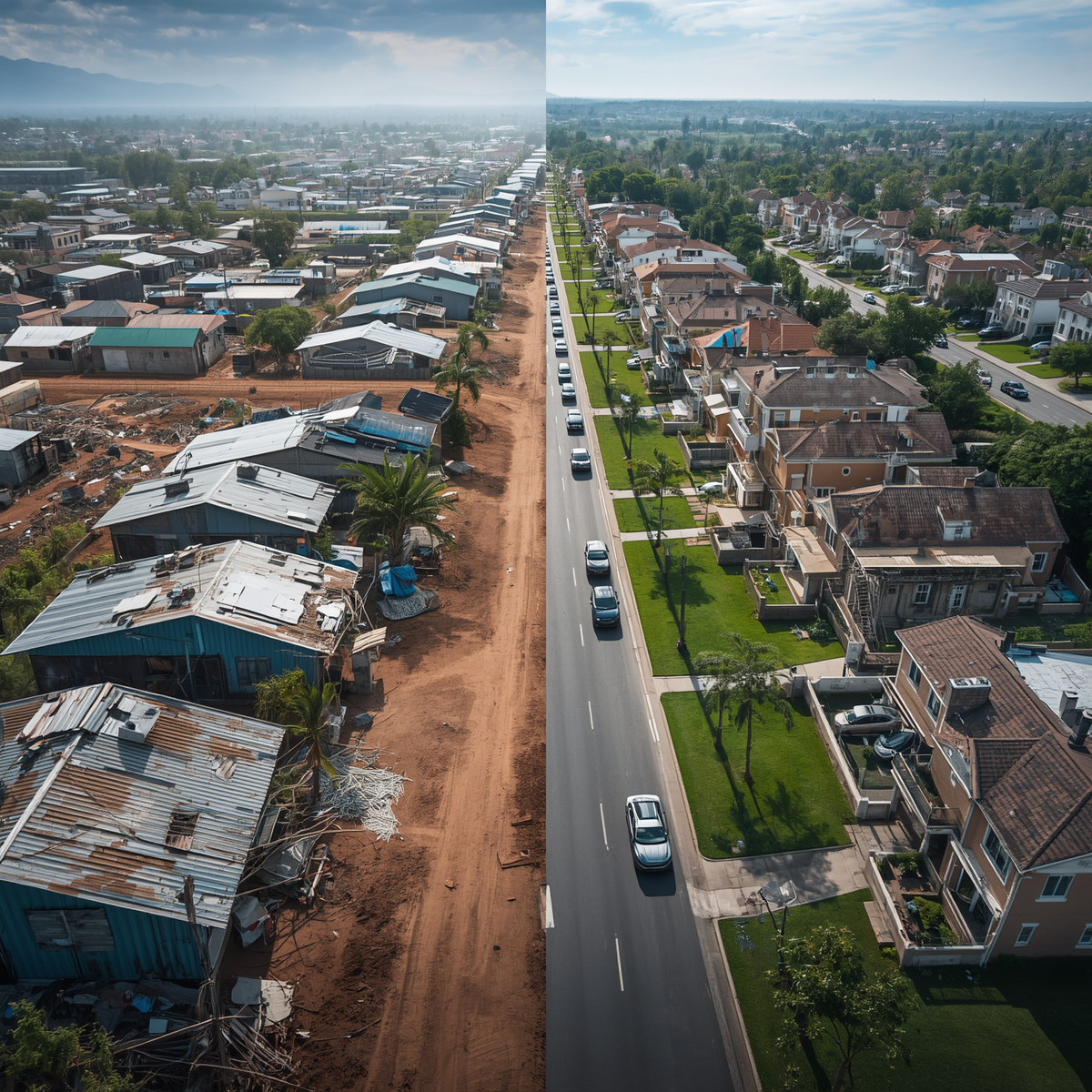

It’s an age-old debate that never seems to settle: Sydney or Melbourne? Populated by the classic imagery of a picturesque beachy harbour versus a beating cultural mega-hub, I’m going to take a stab at this question by comparing the looming question which both cities share: where do we build more houses?
Alex Jambrich (ESSA Unimelb)
[ Alex is a Bachelor of Arts student at the University of Melbourne double majoring in Economics and Creative Writing. His writing aims to demystify the complex economic jargon that can restrict the audiences to economic journalism, writing fun and engaging articles that unite geography, politics and real-world stories.]
The question is naturally all about location. Yet despite the shared buzz of unaffordable housing both cities face, urban planners face very different dilemmas dictated by the geography they are dealing with.
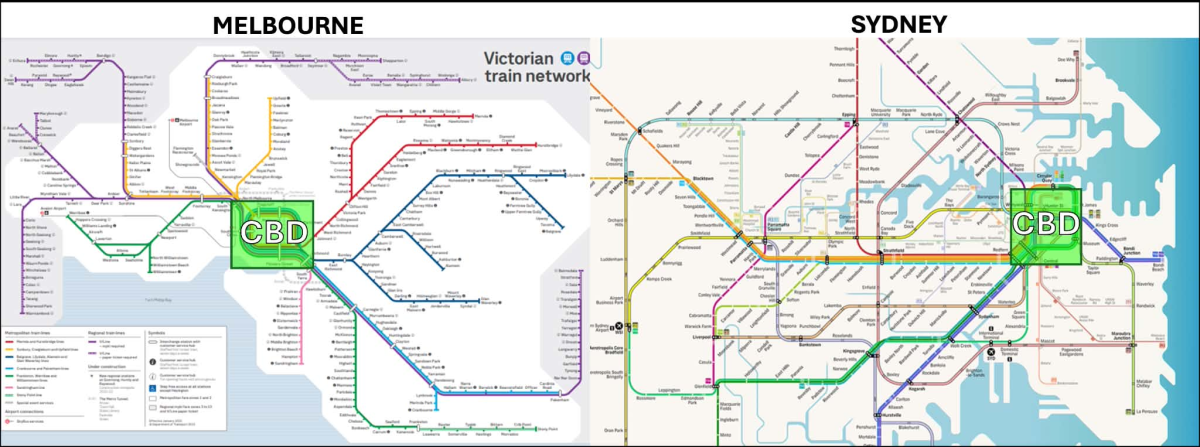
Figure 1: Train Infrastructure between Melbourne and Sydney (Source: Transport Vic / NSW)
Bottleneck Bridges
Melbourne sits on a sprawling flat plain, its CBD central, with wiggle room to expand into the surrounding grasslands. Sydney’s connectivity is restricted by its location: National parks to the North and South, Pacific Ocean 6kms from the CBD to the west.
The Sydney Harbour Bridge, whilst a cultural icon, is a bottleneck for transit running north-south, with all public transport connecting the two sides being forced to run across it. Sydney has plenty of bridges mirroring this limiting characteristic, that clog up with cars at rush hour, raising the commute time. It’s rare for a city of its size to boast three national parks—Lane Cove, Gadigal and North Head—each only 8kms from the CBD. Coupled with the city’s many beaches, the easy access to nature is a core part of its liveability. However, this is also its greatest drawback when it comes to building fresh housing.
Where? is a question which has to not only tackle the complexities of scarce locations, but differing inter-suburb viewpoints for the future of Sydney’s expansion, against Melbourne’s largely homogenised inter-suburb similarities. The fragmented peninsula-and-harbour geography of Sydney begets vastly diverse cultural enclaves: the beach-town havens of Dee Why and Bondi have teenagers zooming by on thick-tired electric bikes, hilly slopes hiding the roar of the city. The North is home to leafy green and cresting hills and gullies, the inner-west a catacomb of lanes and terrace houses. These communities are becoming increasingly fragmented and are evolving in separate directions in terms of the people that live there.
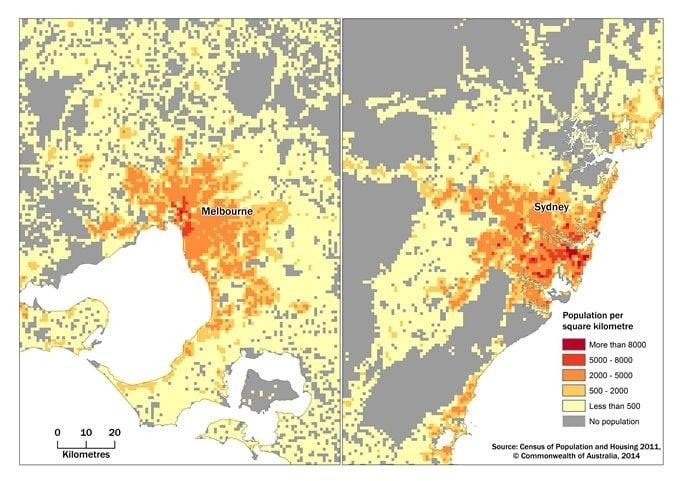
Figure 2: Population density between Melbourne and Sydney (Source: Census of Population and Housing)
Peninsular Premiums
When we think Sydney, we think of the harbour bridge with bright blue currents beneath, the opera house proudly centre-stage to a backdrop of waterfront houses dotting the harbour. The reality behind this is a picturesque harbour view pricing premium. Having a view of the water adds an estimated 122% additional valuation to a Sydney property, compared to 42% in Melbourne, which lacks the same quality of ocean views (no offence to Port Phillip bay).
These prices say a lot about the types of people you’ll see in the two cities. Studies in 2025 found Sydney as the home to 152,900 millionaires, 160% larger than Melbourne’s 94,000. More than half of Australia’s top 15 richest suburbs are found in Sydney’s inner city. Melbourne boasts just one: Toorak, Australia’s wealthiest suburb by concentration.
Waterview houses are more expensive to build; not coincidentally, home elevator demand has risen 900% in the city in the last decade. Sydney holds the title for the highest housing premium in a city globally of 118%. Alongside this is a culture of prioritising the preservation of harbour’s beauty over overdevelopment. ‘Nimby’ is a pejorative slang to describe the staunch ‘not-in-my-backyard’ (Nimb) attitudes against development in local areas. Sydney is stricken with nimbyisms, baked into a historic attitude of infrastructure development spoiling the neighbourly beachy feel; in the 70s, local residents blocked developments of railway lines connecting the Northern Beaches to the CBD; resulting in an overcrowded B1 bus route taking 9,500 people across the Spit Bridge daily in 2025. Similarly, in 1996 a railway proposal connecting Bondi junction to Bondi Beach was dropped. These attitudes haven’t shifted in 2026. Take Lindfield, 10kms from the CBD (now only a 22 minute commute thanks to the Sydney Metro) with FaceBook posts abounding ‘Lindfield’s Future at Risk!’ of a ‘Flawed Affordable Housing Model’ in response to plans for eight story apartments near the station. New developments within Sydney’s close proximity to CBD suburbs face the outcry of established residents who seek to preserve the suburban atmosphere they are accustomed to.
All this has a flow-on effect on the culture, rental and house prices of the suburbs where planners most want to build. Melbourne has a faster growth rate of 2%, compared to Sydney’s 1.4%, expecting to take the crown of Australia’s most populous city late next year. The average cost per month to rent a one-bed apartment in Sydney’s inner suburbs is almost double that of Melbourne’s: $3271.95 compared to $1793.36. The ideal spot in Sydney to rent as a student is the idealised Inner West, inland from the water yet close to universities where terrace housing is the norm, not competing with million-dollar mansions. Melbourne has a ring of equivalent Inner-West type suburbs, such as Brunswick, Fitzroy, Collingwood, South-Yarra and Richmond, where terrace-housing has been preserved since its inception, without competing with the demand for profitable ocean-views.
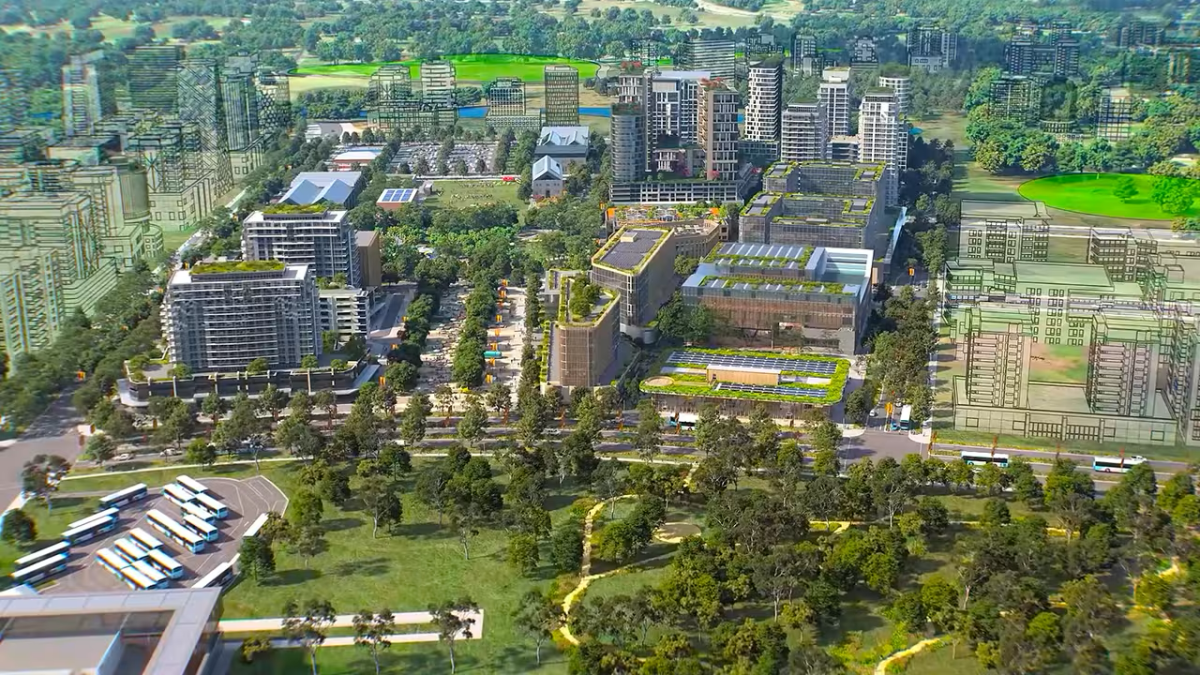
Figure 3: Digital Imagining of the Bradfield CBD (Source: Arterra Interactive)
Where to build?
Sydney’s planners are aware of this. If upwards growth is stagnant within the inner suburbs, the only move is outwards. They can’t go eastward (the ocean), they can’t go north or south (Ku-ring-gai & Royal national parks), so they must go westward. Enter: Bradfield CBD.
Bradfield two years ago was large, vacant plots of land. Now it is abundant in machinery and workers. NSW’s government approved an initial $1 billion dollars of funding towards the development of the area as a third CBD hub (on the existing CBD and Parramatta), with claims of 10,000 new homes and 20,000 new jobs for Western Sydney residents.
This is adjacent to plans for the Western Sydney Airport scheduled to open later this year. This airport is designed to cut strain on the traffic commute times for residents to the main Sydney airport, 7th in Global traffic.
The NSW government also announced an electrified rail connecting Newcastle to Sydney. The High-Speed Rail Authority announced in February it will first complete an estimated $55-$61.2-billion-dollar connection between the two cities, followed by a potential extension to Western Sydney airport, bringing the total costs up to $93 billion dollars. This would be the most expensive infrastructure project in Australian history.
Melbourne can benefit greatly from its interconnectivity and wide spaces to expand, and should, without the great costs associated with having a harbour. Those harbourside views of Sydney sure provide their pretty perks, yet being bayside boasts its building benefits.
Cover image: Britannica
References:
Australian Bureau of Statistics. 2025. “Capital cities continue strong growth”. https://www.abs.gov.au/media-centre/media-releases/capital-cities-continue-strong-growth
Australian Government. 2026. “Newcastle to Sydney”. High Speed Rail Authority.
Budget Direct. 2026. “Compare the cost of living in Melbourne to Sydney. https://www.budgetdirect.com.au/interactives/costofliving/compare/melbourne-vs-sydney/
Capuano, Glenn. 2014. “Australia Population Grid – a new view of population density”. Informed Decisions. https://www.id.com.au/insights/articles/australian-population-grid-a-new-view-of-population-density/
Cartwright, Jane. 2025. “Lindfield’s Future at risk!”. Facebook. https://www.facebook.com/groups/4513939598644760/posts/23882922484653182/
Johnstone, Henry. 2025. “Chargrilled chicken wars: Is the Red Rooster Line being redrawn?”. Realcommercial. https://www.realcommercial.com.au/news/chargrilled-chicken-wars-is-the-red-rooster-line-being-redrawn
Lee, Chyi Lin. Piracha, Awais & Youqing Fan. 2018. “Another tale of two cities: access to jobs divides Sydney along the ‘latte line’”. The Conversation. https://theconversation.com/another-tale-of-two-cities-access-to-jobs-divides-sydney-along-the-latte-line-96907
Loader, Chris. 2023. “How is population density changing in Australian cities? (2023 update)”. Charting Transport. https://chartingtransport.com/2023/06/10/how-is-population-density-changing-in-australian-cities-2023-update/
O’Brien, Juliette. 2025. From Palm Beach to Cottesloe: The wealthiest (and most indebted) suburbs in Australia. Forbes Australia. https://www.forbes.com.au/covers/billionaires/the-wealthiest-and-most-indebted-suburbs-in-australia/
Stubbs, Winne & Woodly, Melissa. 2025. “The world’s richest cities have been ranked – here’s where Sydney landed on the elite list in 2025”. TimeOut. https://www.timeout.com/sydney/news/the-worlds-richest-cities-have-been-ranked-and-heres-where-sydney-landed-on-the-elite-list-in-2025-040925
V/Line. 2026. “Network Maps”. https://www.vline.com.au/Maps-stations-stops/Network-Maps
Wiggins, Jenny. 2026. “Sydney-Newcastle $93b high-speed rail plan ‘far-fetched’”. Financial Review. https://www.afr.com/companies/infrastructure/sydney-newcastle-93b-high-speed-rail-plan-far-fetched-20260224-p5o4xg
Zielinski, Caroline. 2022. “Toorak, a Suburb of Melbourne, Is a Hub for Generational Wealth and Large Private Estates”. Mansion Global. https://www.mansionglobal.com/articles/toorak-a-suburb-of-melbourne-is-a-hub-for-generational-wealth-and-large-private-estates-01665227248