

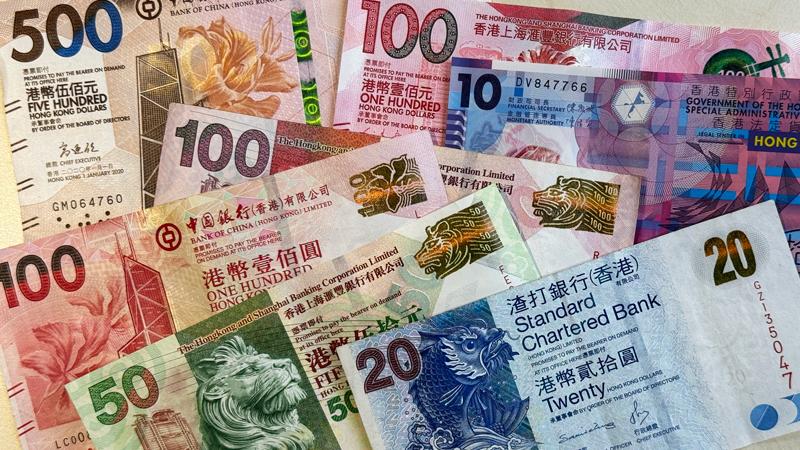
On a recent trip to Hong Kong, I had noticed something that hadn’t quite stood out before. Hong Kong’s cash is printed and distributed by three commercial banks – HSBC, Standard Chartered Bank and Bank of China – while production is also overseen by the government itself.
Elly Lau
ESSA Monash Clayton
[Elly studies Economics and Psychology, and is a Publications Director at ESSA. She is interested in exploring how ideas from economics, behavioural science and political theory can inform one another in meaningful ways. With her interdisciplinary academic background, she aims to explore the intersection of everyday life and abstract ideas.]
Disclaimer: The views expressed in this article are those of the author and do not necessarily reflect the views of affiliated organisations.
Studying economics in Australia, the Reserve Bank of Australia (RBA) tends to sit saliently in most introductory courses. Many might not even think about where our money physically comes from. The central bank institution is younger than most people assume, and its existence is not universal. Some economies, Hong Kong among them, run without one in the conventional sense. Understanding why central banks emerged, and why a handful of places never adopted the model, says a great deal about what money actually is and who gets to control it.
Where central banks began
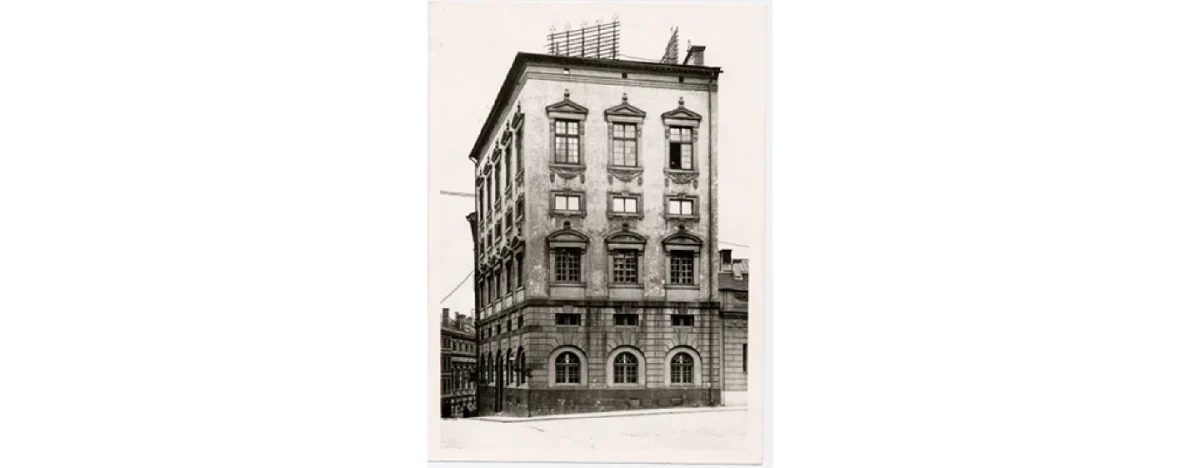
A central bank is the term used to describe the authority responsible for policies that affect a country’s supply of money and credit (Bordo, 2007). The world’s oldest central bank is the Swedish Riksbank, chartered by the Riksdag in 1668. Its establishment came about after its private predecessor Stockholms Banco – the first European bank to print banknotes – collapsed under the weight of poorly backed credit notes (Riksbank, 2026). The Swedish Riksbank was notably founded by the Swedish parliament as a government bank in order to separate it from the collapse of a commercial bank that had strong financial links to the crown (Bytheway, 2021). Charles Goodhart has argued that the lasting significance of the Riksbank lies less in its early founding date and more in the principle it established: that public money should answer to parliamentary over royal authority (Bordo & Schwartz, 1993). The Bank of England followed in 1694 and was created as a joint stock company to help finance England’s war against France, in exchange for the right to manage government debt (Bordo, 2007). From there the model spread across Europe through the eighteenth and nineteenth centuries.
Why the institution persisted
Central banks survived over time because they were useful to governments, with their role widening beyond financing the state. Even after the war-torn French Revolution and the Napoleonic Wars that followed, when Napoleon founded the Banque de France in 1800 to restore confidence in a currency battered by hyperinflation, the broader central banking model kept expanding (Banque de France, 2026). Over the course of the nineteenth century, central banks took on responsibilities beyond their original founding purpose: acting as lender of last resort, managing the national money supply and eventually guarding against inflation. A central bank can enact monetary policy, whereby it sets interest rates, regulates how much credit commercial banks extend, and steps in when the financial system seizes up in a way that no private actor is willing or able to do (RBA, 2026). While in modern history, an economy needs one independent and nonpartisan institution capable of acting in the collective interest of financial stability, the tradeoff is that this concentrates enormous power over the value of money in one body, which is precisely why independence and accountability became such contested questions.
The exception
Not every economy has taken this path, and Hong Kong is a clear example. Rather than a central bank issuing notes directly, the Hong Kong Monetary Authority authorises three commercial banks, HSBC, Standard Chartered, and Bank of China (Hong Kong), to print Hong Kong dollar notes on its behalf (Hong Kong Monetary Authority, 2025). This arrangement traces back to the colonial era, when banks such as the Oriental Bank Corporation and the Chartered Bank began issuing notes in the 1860s, long before any monetary authority existed to coordinate them. Interestingly, these notes were not accepted by the Treasury for payment of taxes, although they were accepted for use by merchants. A monetary authority of sorts did eventually arrive, though not the kind economics students usually picture. The Exchange Fund was established in 1935, operating as a colonial currency board wherein Hong Kong dollars were backed by sterling reserves and were fully convertible into sterling at a fixed rate (Culp & Hanke, 1993). Notably, a currency board is not a central bank. A currency board can only supply notes and coins, it has no discretionary control over the monetary base, and, critically, cannot act as a lender of last resort or regulate commercial banks the way a central bank can. Hong Kong, in other words, built a system that guaranteed the value of its currency without ever building the institution most economies rely on to do that job.
Beyond Hong Kong, two other economies illustrate different reasons for going without a central bank. Panama has had almost no central banking history at all, having adopted the US dollar as legal tender back in 1904 as part of a strategy to cement its financial and commercial ties with the United States. Further, it still lacks the capacity to print its own money or conduct traditional monetary policy today (International Monetary Fund, 2023). Monaco, on the other hand, does not have a currency or central bank of its own, and instead relies on France’s monetary infrastructure, using French-issued notes and coins and now operating under the euro through its agreement with the European Union (Global Tenders, 2026). Trade-dependent economies often calculate that the credibility of borrowing someone else’s currency outweighs the benefits of monetary independence, even if it means giving up the tools that a central bank would normally provide.
Do successful economies necessitate central banks?
Not necessarily. Small yet highly open economies can thrive by borrowing credibility from another currency instead of building their own monetary authority, while larger economies tend to need the flexibility a central bank provides to respond to local shocks. What connects the Riksbank of 1668 and the note-issuing banks of Hong Kong today is the same underlying question: who should the public trust to guarantee the value of the money in their pocket? Whether it is parliament, a technocratic institution, or commercial banks bound by contractual requirements, each answer reflects a different judgement about where credibility comes from, and each carries a different set of risks. The history of central banking is, in that sense, a history of institutions searching for the least fragile answer to a question that never fully goes away.
References
Banque de France. (2024). The history of the Banque de France. https://www.banque-france.fr/en/banque-de-france/institution-rooted-history/founding-history-banque-de-france
Bordo, M. D. (2007). A Brief History of Central Banks. Economic Commentary, (12/1/2007). https://www.clevelandfed.org/publications/economic-commentary/2007/ec-20071201-a-brief-history-of-central-banks
Bordo, M. D., & Schwartz, A. J. (1993). NBER WORKING PAPER SERIES.
Bytheway, S. (2021). Public debt, private wealth: A history of central banks. Origins: Current Events in Historical Perspective, Ohio State University. https://origins.osu.edu/article/public-debt-private-wealth-history-central-banks
Culp, C. L., & Hanke, S. H. (2002). The Hong Kong Linked Rate Mechanism: Monetary Lessons for Economic Development.
Global Tenders. (2026). Economy of Monaco. https://www.globaltenders.com/economy-of-monaco
Hong Kong Monetary Authority. (2025). Notes. https://www.hkma.gov.hk/eng/key-functions/money/hong-kong-currency/notes/
International Monetary Fund & World Bank. (2023). Panama: Financial sector assessment. World Bank. https://documents1.worldbank.org/curated/en/099613104102429031/pdf/SECBOS1af572a90621b72716e27781ecaec.pdf
Reserve Bank of Australia. (2025). Our role. https://www.rba.gov.au/about-rba/our-role.html
Sveriges Riksbank. (2026). History. https://www.riksbank.se/en-gb/about-the-riksbank/history/