
‘GDP tells us the cost of everything, and the value of nothing’.
Alanna Tran
ESSA Monash Clayton
[Alanna is a third-year Bachelor of Commerce (Economics) student at Monash University. She is currently a Publications Director at ESSA and is deeply engaged in how policy can be adapted to cater to an ever-changing environment. She is eager to evaluate both the insight and shortcomings of economics models and how they apply to the real-world.]
Disclaimer: The views expressed in this article are those of the author and do not necessarily reflect the views of affiliated organisations.
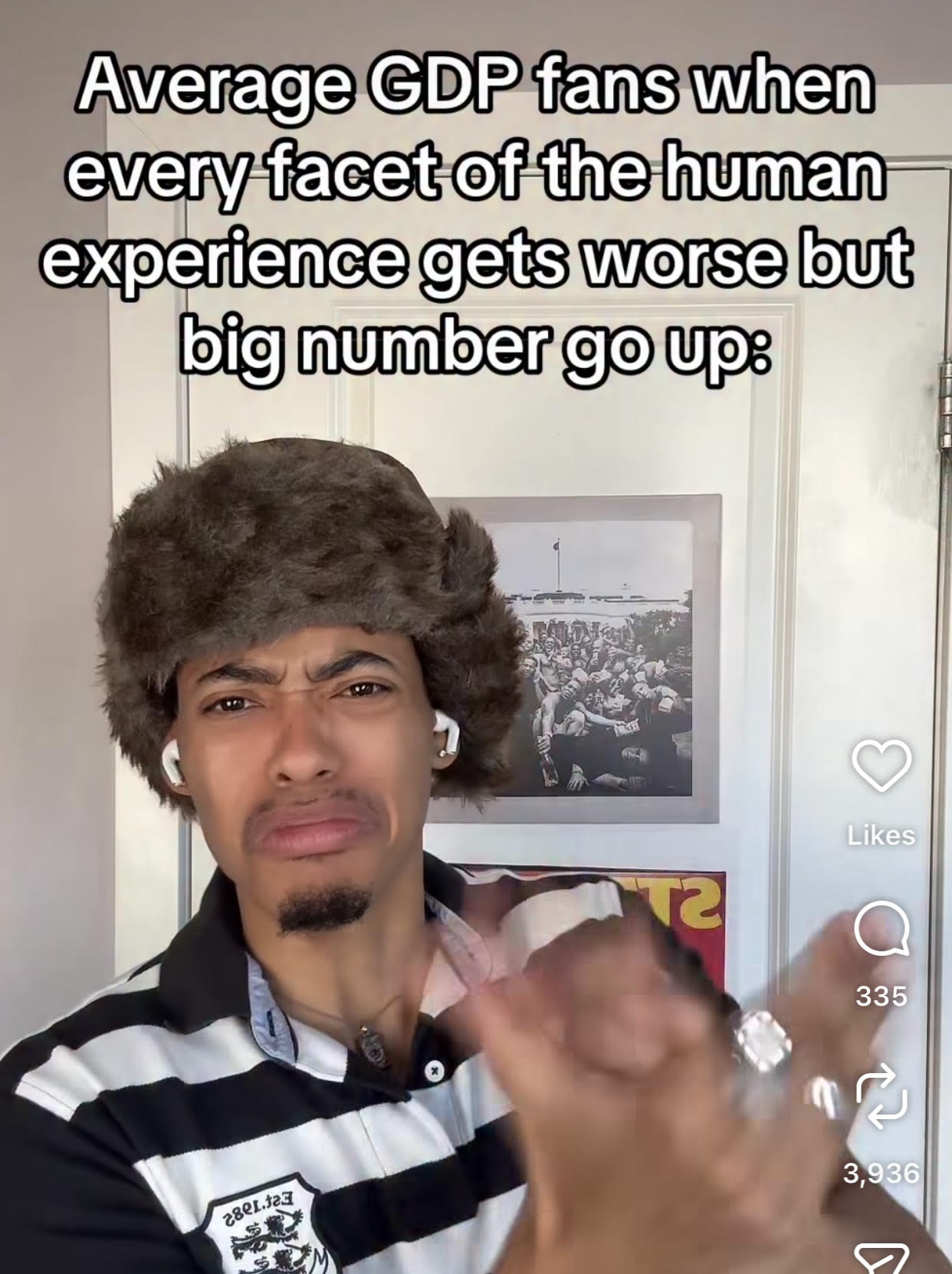
While the Secretary-General of the United Nations, António Guterres might be one of the more recent vocal critics of GDP, he is definitely not the first. But first, to understand all of this, we need to define GDP. Gross Domestic Product (GDP) takes the total monetary value of all final goods and services produced within a country’s borders during a specific time period. The measure was developed after the Great Depression and eventually became the shorthand for economic health and a key pillar of macroeconomics (Wang & Chen 2022). However, its own designer Simon Kuznets explicitly warned against GDP being used as a measure of social welfare. Since then, this wary sentiment has been echoed by figures such as Robert F.Kennedy who pointed out that GDP ignores some of the most important factors in raising living standards such as the quality of health and education. To this day, whether you look at the UN BeyondGDP initiatives or on social media, GDP is increasingly being viewed as an outdated measure that no longer fully captures what we value today.
The Limitations of GDP
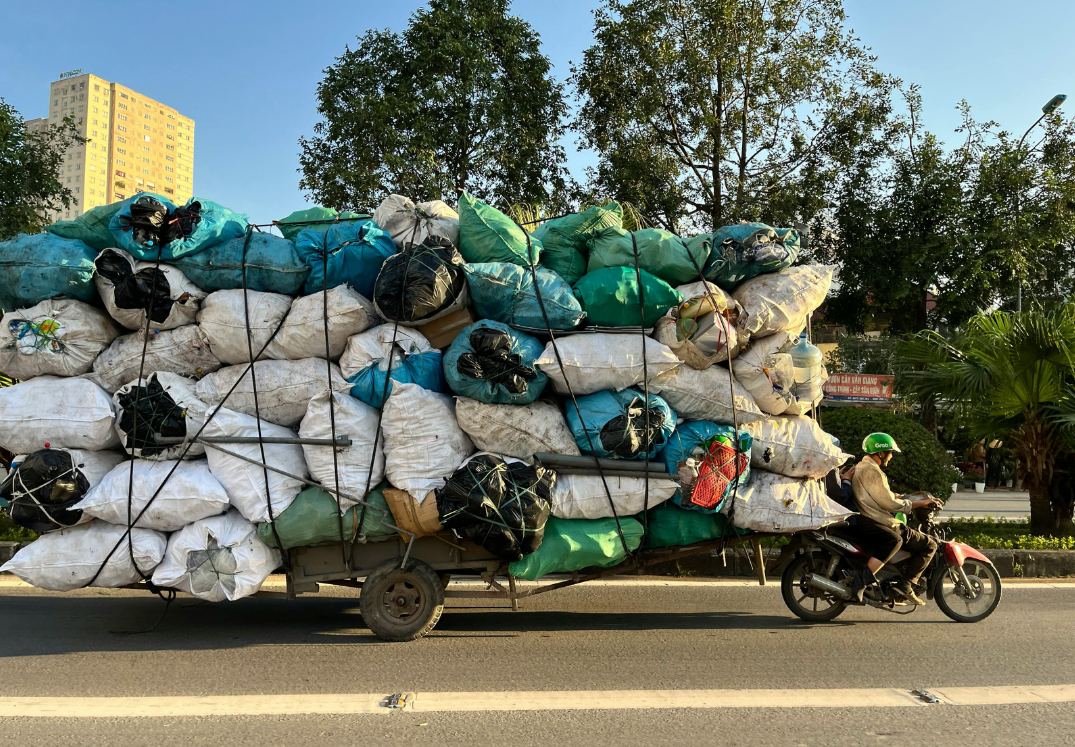
Perhaps one of the most common criticisms of GDP is its primary focus on the production of more goods and services, while ignoring the additional negative effects that might impact one’s quality of life. As Guterres put it: ‘When we destroy a forest, we are creating GDP… When we overfish, we are creating GDP’, yet the negative externality of deforestation and eco-system disruption are not taken into account with GDP (Taylor 2026). Furthermore, it does not take into account things like unpaid domestic labour and quality of education which some argue leads to distorted growth rates. DeRock (2019) argues that this is most visible in the exclusion of activities such as child rearing or caring for the elderly where it is women’s labor who is often overlooked and thus this leads to an artificially low GDP.
Another common criticism is that GDP ignores or masks increasing inequality. Here, Guterres paints a grim image of how inequality is rising, with the World Inequality Report (2026) stating that billionaires have seen their wealth grow faster than any other group. He says ‘If all the new income accrues to a few individuals, and the GDP grows, all citizens are expected to cheer’ (Taylor 2026). On a different note, Berg & Ostry (2017) offer a different view. They point out that longer periods of GDP growth are robustly associated with reduced income inequality. However, they also mention that for policymakers to solely pursue growth is a ‘gamble’. Instead, aiming to reduce inequality through policy might be more effective in ensuring sustained economic growth by promoting social cohesion and unlocking human capital. Regardless, the lack of direct focus on equality with GDP leads many people to argue that it ultimately masks what is truly happening to living standards.
Can GDP Grow Indefinitely?
Critics would argue that GDP cannot grow indefinitely with Earth’s finite resources. However, others argue that growth in GDP does not necessarily require more resources but rather it requires the creation of more value. There is a point in stating that in developing more sustainable technologies, GDP and resource use can be decoupled. Yet, many are skeptical about whether this will manifest in reality, in a world with planned obsolescence and aggressive advertising. Additionally, while a number of high-income countries have been able to reduce emissions while continuing to grow their GDP, this falls far short from Paris-compliant rates (Vogel & Hickel 2023).
So what are the Alternatives?
When people talk about alternatives to GDP, the Genuine Progress Indicator (GPI) is often referred to. The GPI takes consumption and adds ‘positives’ such as higher education or domestic labor while subtracting ‘negatives’ such as pollution or crime (Kubiszewski 2019). The Human Development Index (HDI) is another alternative where a score between 0 and 1 aims to measure a country’s overall social and economic wellbeing (HDR, n.d). This involves taking into consideration the Gross National Income (GNI) as well as things like life expectancy. However, none of these prevail as a frontrunner in replacing GDP as the main metric. These indicators are easy to use; however, this means that they are only complementary and cannot be integrated into many systems (Goldin & Chalali 2026). This means that they risk quickly becoming sidelined while having minimal impact.
On the other hand, some are calling for more drastic initiatives (Taylor 2026). Degrowth is a movement that rejects GDP entirely and advocates for a planned reduction in consumption and production. More emphasis has also been put on doughnut economics where production is designed to meet the needs of people within the limits of ecological limits. Furthermore, António Guterres also asserts that more extensive initiatives where the control over production is democratised.
Conclusion
Ultimately, GDP is unlikely to be replaced entirely. Nevertheless, movements like BeyondGDP demonstrate the demand for alternative indicators that include important aspects of human wellbeing. On the other hand, more extensive measures such as degrowth continue to gain traction but have yet to truly influence policy. All in all, GDP is a flawed metric and recognising its flaws are the first steps towards measuring what we truly care about.
References
DeRock D (2021) ‘Hidden in Plain Sight: Unpaid Household Services and the Politics of GDP Measurement’, New political economy, 26(1):20–35, doi:10.1080/13563467.2019.1680964.
Heys R, Bhardwaj H and Taylor C (2026) ‘How to measure a good life – tips for moving beyond GDP’, Nature (London), 651(8107):883–886, doi:10.1038/d41586-026-00884-3.
Human Development Reports (HDR) ‘Human Development Index (HDI)’, HDR, accessed 19 October 2026, https://hdr.undp.org/data-center/human-development-index#/indicies/HDI
Kubiszewski I (2019) ‘The Genuine Progress Indicator: A Measure of Net Economic Welfare’, in Encyclopedia of Ecology, Elsevier B.V, The Netherlands, doi:10.1016/B978-0-12-409548-9.10609-8.
Ostry JD and Berg A (2011) Inequality and unsustainable growth: two sides of the same coin?., International Monetary Fund, Washington, DC, doi:10.5089/9781463926564.006.
Taylor M (9 February 2026) ‘Global economy must move past GDP to avoid planetary disaster, warns UN chief’, Guardian, accessed 17 October 2026, https://www.theguardian.com/environment/2026/feb/09/global-economy-transformed-humanity-future-un-chief-antonio-guterres
United Nations University Centre for Policy Research (UNU-CPR) ‘Moving Beyond GDP: Measuring Human and Planetary Well-being’, UNU CPR, accessed 17 October 2026, https://unu.edu/cpr/blog-post/moving-beyond-gdp-measuring-human-and-planetary-well-being
Vogel J and Hickel J (2023) ‘Is green growth happening? An empirical analysis of achieved versus Paris-compliant CO2–GDP decoupling in high-income countries’, The Lancet. Planetary health, 7(9):e759–e769, doi:10.1016/S2542-5196(23)00174-2.
Wang B and Chen T (2022) ‘Social Progress beyond GDP: A Principal Component Analysis (PCA) of GDP and Twelve Alternative Indicators’, Sustainability, 14(11):6430, doi:10.3390/su14116430.
World Inequality Report (2026) ‘Global Economic Inequality’, World Inequality Report, accessed 25 October 2026, https://wir2026.wid.world/insight/global-economic-inequity/