
On 12 March, the United States Department of Treasury issued Russian-related General License 134, reversing sanctions of Russian oil imports for a 30-day period. Even though it may seem to provide some relief to global fuel shortages, it undermines broader efforts of international diplomacy, potentially worsening the conflict.
Sebastian Gibby
ESSA Unimelb
[Sebastian is a first year Bachelor of Commerce student at the University of Melbourne interested in pursuing a double major in economics and finance. The following article displays his interest in American economic issues and its impact on the global economy.]
Disclaimer: The views expressed in this article are those of the author and do not necessarily reflect the views of affiliated organisations.
It is easy to miss some of the stories about the Iran War. However, on 12 March, the United States Department of Treasury issued Russian-related General License 134, reversing sanctions on Russian oil imports for a 30-day period, and allowing countries to buy sanctioned Russian crude oil and petroleum in tankers stranded on sea before March 12. Despite protest from key Democratic figures, this relief was extended for another 30-day period starting April 17. Even though it may seem to provide some relief to global fuel shortages, it undermines broader efforts of international diplomacy, potentially worsening the conflict.
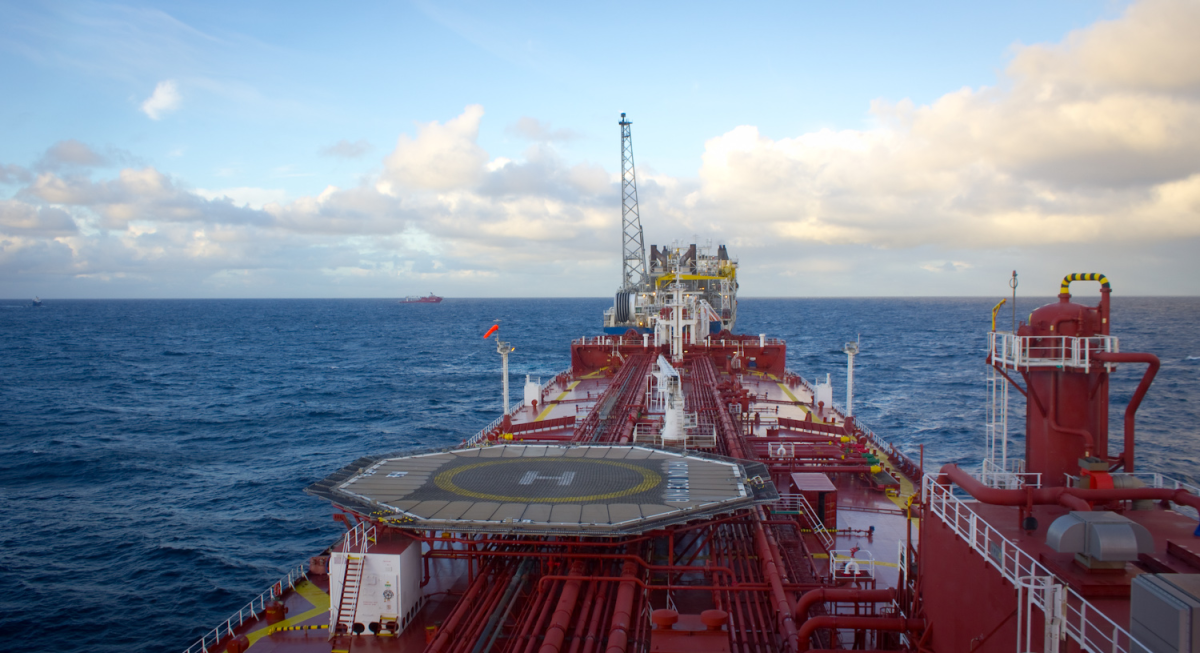
Fig. 1. Jon Olav Eikenes, Oil tanker approaching FPSO, 2012
How do Russian Oil Sanctions Work?
International trade restrictions on Russian products have existed to some extent since the country’s annexation of Crimea in 2014, though these were targeted at specific businesses. More recently, the 2022 Russian invasion of Ukraine prompted countries within the G7, EU and Australia to place sanctions on Russian oil, preventing the import of oil and petroleum.
In addition, a price cap of 60 USD per barrel was placed on seaborne Russian crude oil, preventing companies in these countries from supporting the shipment of Russian oil sold above this price cap. Through this price cap, it provides a disincentive for other countries to import Russian oil as it would be riskier without Western-shipping services and insurance. The Australian Department of Foreign Affairs and Trade said that such action was taken with the ‘[aim] to diminish Russia’s ability to finance its illegal and immoral war against Ukraine’.
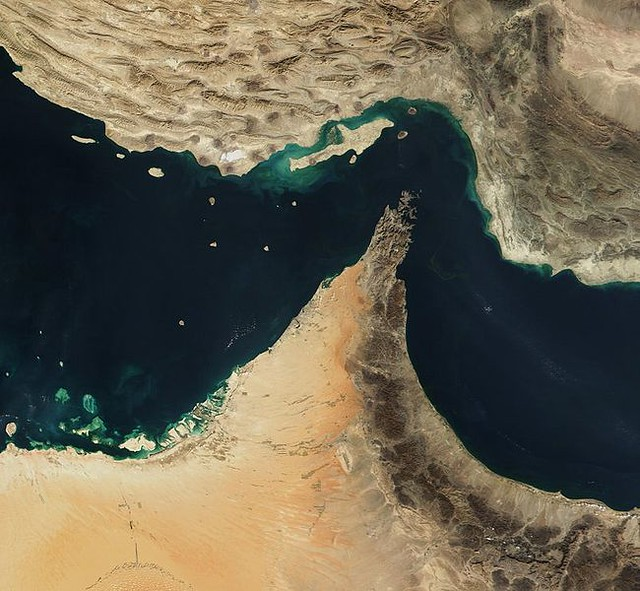
Fig. 2. Jacques Descloitres, Satellite image of the Strait of Hormuz, 2010
Effects of the Iran War in US Oil Markets
Following the United States and Israel launch of airstrikes on Iran on 28 February 2026, commercial ships that travel through the Strait of Hormuz – which accounts for 25% of the international marine oil trade – have been subject to missile and drone strikes, as well as damage from sea mines. This has seen insurance companies refusing to insure shipments that enter the Strait, creating a global shortage in oil supplies which in turn saw oil prices surge.
Despite the US extracting 60% of its crude oil needs domestically, the Strait of Hormuz still accounts for 7% of US crude oil imports, with petroleum imports from other countries using crude oil from the Strait. As such, the disruption of crude oil imports alongside broader effects in the US oil market caused US gasoline prices to rise from 2.29 USD/Gallon (Feb 27) to 2.96USD/Gallon (Mar 12), prompting a similar rise in retail gasoline prices.
In an effort to alleviate American and broader global fuel shortages, the US Department of Treasury issued Russian-related General License 134, reversing the United States’ enforcement of the Russian oil price cap, and allowing the sale of Russian oil loaded before March 12 for 30 days. With Russian-related General License 134B, this sanctions relief was extended for another 30 days beginning on 17 April .
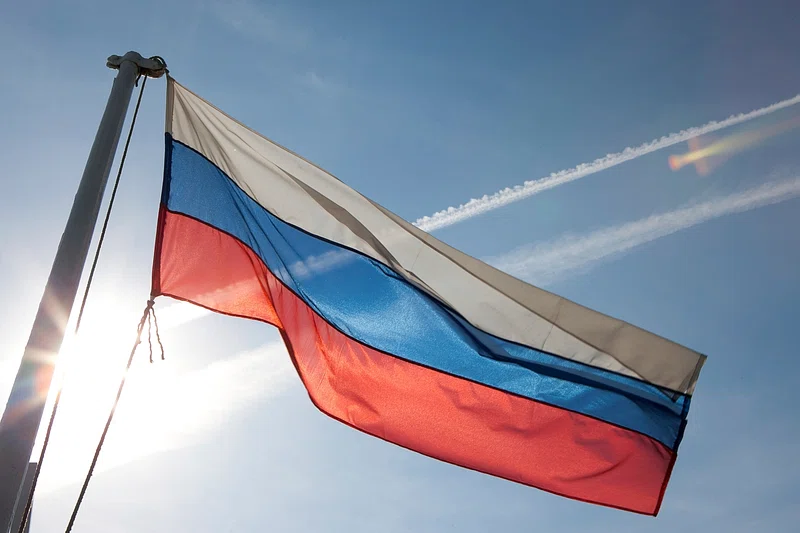
Fig. 3. Rawpixel, Russian Flag, 2026
What are the harms of reversing Russian oil sanctions?
Whilst this does not mean that the US is directly importing Russian oil products, it does enable countries such as Cuba, India and Brazil to buy Russian oil and be provided with US insurance services. This was done in an attempt to stabilise global oil markets by alleviating supply shocks from stranded Russian oil shipments which saw urals oil barrels worth as high as 100.67USD/Barrel (Mar 9) despite leaving Russia below the 60USD/Barrel price cap prior to the War’s start.
It is unclear if reversing Russian oil sanctions has had any benefit on global oil markets given that crude oil prices continue to soar as the War stretches on. What is clear though is how Russia wins from such reversal.
In March, there was a 115% increase in seaborne crude oil export revenues for Russia. This increase in oil revenue ultimately supports Vladimir Putin, allowing Russia to not only continue funding the War in Ukraine, but also provide military assistance to Iran. This ultimately leads to a vicious cycle, whereby the US lifting Russian oil sanctions in an effort to alleviate global shortages is further fuelling the Iran conflict, placing further pressure on oil and deteriorating international diplomacy.
A resolution to the conflict with Iran, ultimately, will be subject to the agendas of those parties that willed its creation. Until then, unpredictable fuel prices will plague Australia while each push for restoration of the rules-based international order continues to be undermined.
Bibliography
Descloitres, Jacques. Satellite image of the Strait of Hormuz [Photograph], flickr, December 28, 2010.
Eikenes, Jon Olav. Oil tanker approaching FPSO [Photograph], Wikimedia Commons, October 4, 2012.
“Gasoline,” Trading Economics, 2026. https://tradingeconomics.com/commodity/gasoline
“Gasoline and Diesel Fuel Update,” U.S. Energy Information Administration, May 27, 2026. https://www.eia.gov/petroleum/gasdiesel
“Guidance Note – the Import, Purchase or Transport of Russian-Origin Oil and Refined Petroleum Products and Related Services,” Australian Government Department of Foreign Affairs and Trade, February 24, 2026. https://www.dfat.gov.au/international-relations/security/sanctions/guidance-note/import-purchase-or-transport-russian-origin-oil-and-refined-petroleum-products-and-related-services
Hermant, Norman. “Iran war fuel crisis financially benefiting Russia and Vladimir Putin,” ABC, April 9, 2026.
https://www.abc.net.au/news/2026-04-09/how-the-iran-oil-shock-left-vladimir-putin-a-winner/106547558
“How Much Oil Does the United States Import (and Why)?” AFPM Communications, January 24, 2025. https://www.afpm.org/newsroom/blog/how-much-oil-does-united-states-import-and-why
“Issuance of Russia-Related General License | Office of Foreign Assets Control,” Office of Foreign Assets Control | U.S. Department of the Treasury, March 12, 2026.
https://ofac.treasury.gov/recent-actions/20260312_33
“Issuance of Russia-Related General License | Office of Foreign Assets Control,” Office of Foreign Assets Control | U.S. Department of the Treasury, April 17, 2026.
https://ofac.treasury.gov/recent-actions/20260417_33
Montagu-Smith, Nina. “Will Russian Oil Be the Biggest Winner in the US-Israel War on Iran?” Al Jazeera, March 20, 2026. https://www.aljazeera.com/features/2026/3/20/will-russian-oil-be-the-biggest-winner-in-the-us-israel-war-on-iran
Obayashi, Yuka. “Japan to Consider Whether to Buy Russian Crude Following US Sanctions Waiver,” Reuters, March 13, 2026.
“Russia – Australia Implements the G7 Price Cap on Russian Oil,” Australian Government Department of Foreign Affairs and Trade, December 7, 2022.
https://www.dfat.gov.au/news/news/russia-australia-implements-g7-price-cap-russian-oil
Shakil, Ismail, and Gleb Bryanski. “US Issues 30-Day Sanctions Waiver for Purchase of Russian Oil at Sea,” Reuters, March 12, 2026.
“Specified Ukraine Regions Sanctions Framework,” Australian Government Department of Foreign Affairs and Trade, 2021.
“Statement of the G7 and Australia on a Price Cap for Seaborne Russian-Origin Crude Oil,” German Federal Foreign Office, December 2, 2022.
Russian Flag [Photograph], Rawpixel, 2026.
https://www.rawpixel.com/image/5937596/free-public-domain-cc0-photo
“Strait of Hormuz – Oil Security and Emergency Response,” IEA, February, 2026.
https://www.iea.org/about/oil-security-and-emergency-response/strait-of-hormuz
“Urals Oil,” Trading Economics, 2026.
https://tradingeconomics.com/commodity/urals-oil
Wickenden, Luke. “March 2026 — Monthly Analysis of Russian Fossil Fuel Exports and Sanctions,” Centre for Research on Energy and Clean Air, April 13, 2026.
“Warren, Shaheen, Schumer Release Joint Statement Urging Trump Administration Not to Extend Sanctions Relief for Russian Oil,” United States Committee on Banking, Housing, and Urban Affairs, April 10, 2026.
“World Oil Transit Chokepoints,” U.S. Energy Information Administration, June 25, 2024.
https://www.eia.gov/international/analysis/special-topics/World_Oil_Transit_Chokepoints